September 20, 2026
What Kids Learn About Self-Worth From the Stories We Read Them
A child does not need to read a book about self esteem to learn something about their worth. They learn it from the way a character is treated. From whose voice matters. From…
A child does not need to read a book about self-esteem to learn something about their worth.
They learn it from the way a character is treated. From whose voice matters. From whether mistakes lead to rejection or repair, whether big feelings are punished or understood, and whether the quietest character is eventually given room to speak.
Stories are not a substitute for loving care. They are not magic instructions that make every hard feeling disappear. However, when you read with a child, stories can become gentle mirrors, reflecting the child’s inner world while quietly offering another way to see it.
Stories teach children what feelings mean
Many children first experience emotions as something physical and overwhelming: a hot face, a tight chest, a trembling voice, a stomach that feels knotted and sharp. They may not yet have the words to say, “I feel disappointed,” or “I am afraid I will be left out.”
A story can help.
When a character feels worried, jealous, lonely, angry, or confused, the child hears an important message: These feelings exist. Someone else has felt them. I am not strange for having them.
That matters because children can easily confuse an emotion with an identity.
- “I feel angry” can become “I am bad.”
- “I am nervous” can become “I am weak.”
- “I made a mistake” can become “I ruin everything.”
Emotion-focused stories gently separate the feeling from the self. They show that an emotion is something a child experiences, not proof of what a child is.
This is one reason parents and educators seek out children’s books about emotions. The strongest stories do more than name feelings. They show children that feelings can be noticed, shared, understood, and carried through.
Not fixed instantly.
Carried.
Characters become mirrors, and sometimes windows
Educator Rudine Sims Bishop described books as mirrors, windows, and sliding glass doors: mirrors that reflect our own lives, windows into other experiences, and doors that invite us into a new world.
For children, this kind of representation can be deeply personal.
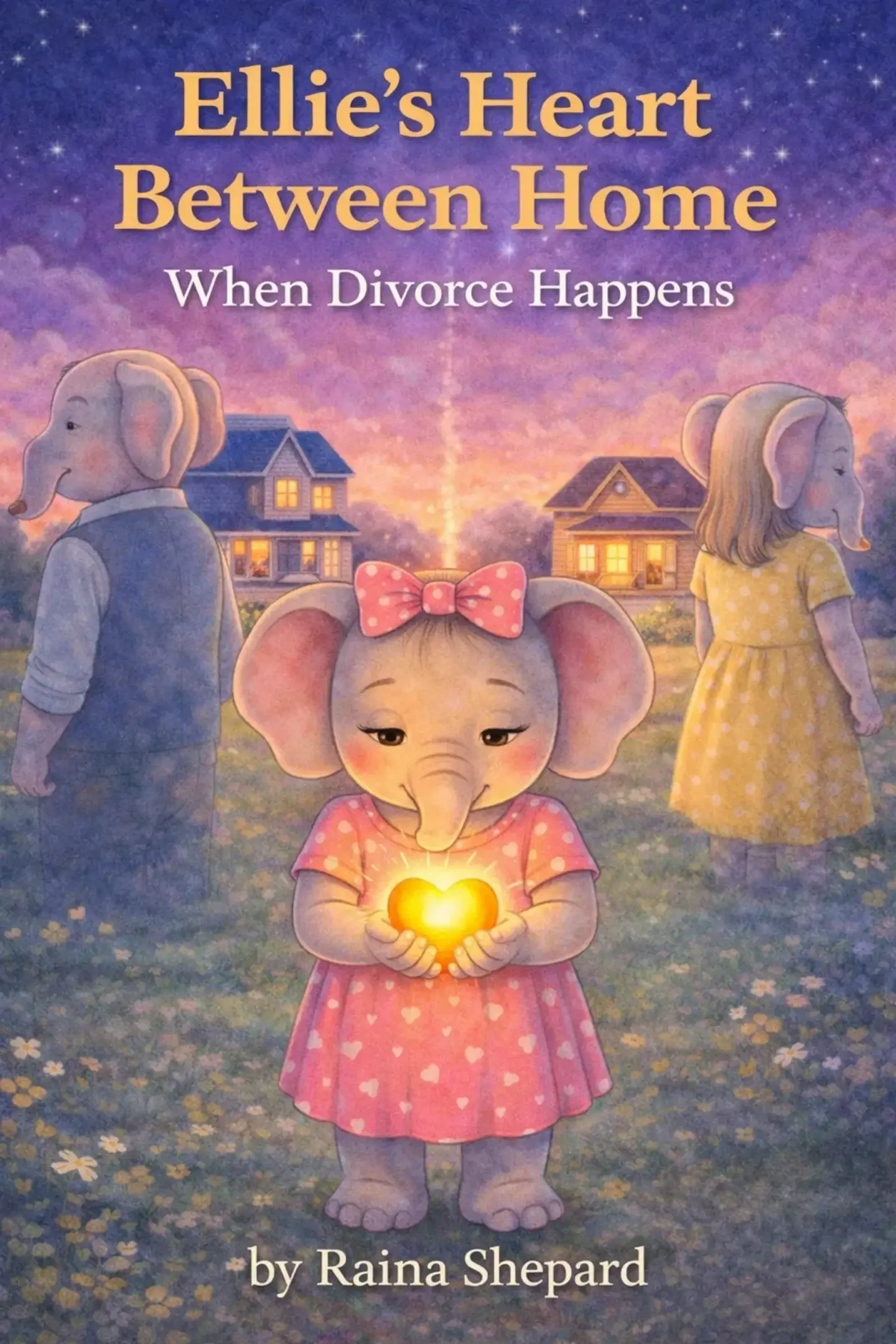
A child who often feels “too much” may recognize themselves in a character who cries easily, worries intensely, or needs more time to adjust. A child living through family changes may see a character holding two homes, two routines, or two different kinds of love. A child who feels overlooked may notice the small, steady choices of a character whose kindness is not loud but still changes the story.
When children see themselves reflected with tenderness, shame can loosen its grip.
They begin to understand:
- My inner world is worth noticing.
- My questions deserve patient answers.
- My differences do not disqualify me from belonging.
That is the heart of books for self-worth kids. The lesson does not need to be stated as a bold declaration on every page. Sometimes it is carried in the image of a character being welcomed back after a mistake, listened to during a hard conversation, or loved without having to perform happiness.
A story can also become a window. Through a character whose life is different from theirs, children practice empathy and perspective-taking. They learn that another person can feel frightened for reasons they cannot immediately see. They learn to pause before judging, to wonder, and to make room.
Self-worth and empathy grow together more often than we realize.
Ellie the Elephant shows that growing is not the same as becoming perfect
In the Ellie the Elephant series, children meet a gentle character who is learning how to understand herself and the world around her.
That distinction matters.
Children are often surrounded by messages about improvement: try harder, calm down, be brave, do better, make us proud. Growth can begin to sound like a demand to become easier for everyone else.
But emotional growth is not the same as becoming smaller, quieter, or endlessly agreeable.
A child can learn to handle disappointment without learning that disappointment is unacceptable. They can practice responsibility without believing that mistakes make them unlovable. They can develop self-awareness without turning every feeling into a personal failure.
Ellie’s stories create space for these middle places. The uncertain, tender seasons when a child is still learning what they feel and what to do next.
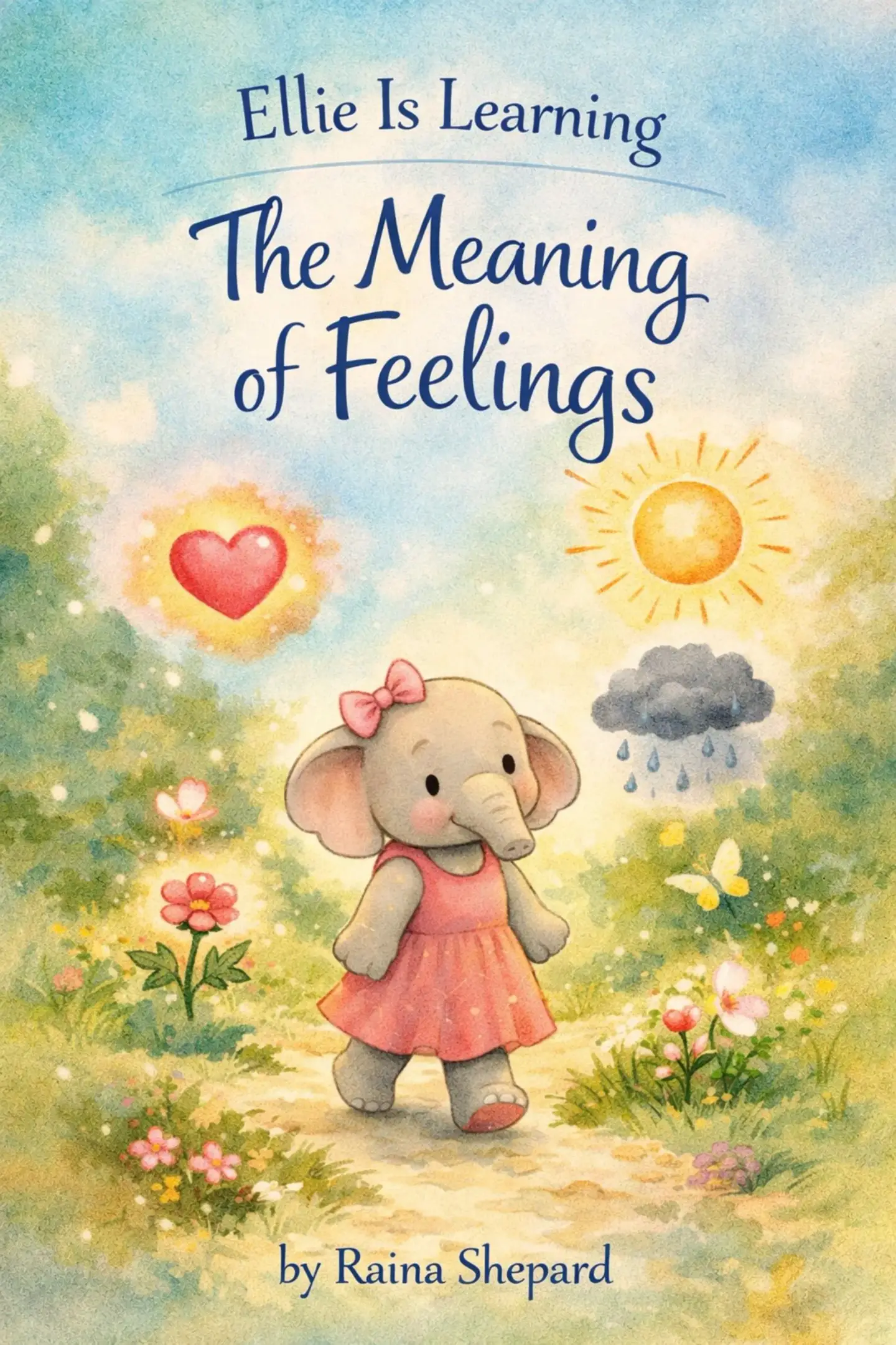
In Ellie Is Learning the Meaning of Feelings, the emotional landscape is presented through familiar images: a heart, sunlight, rain, and the changing expressions of a small elephant. These visual symbols give children a starting point. Feelings can be noticed. They can change. They can coexist.
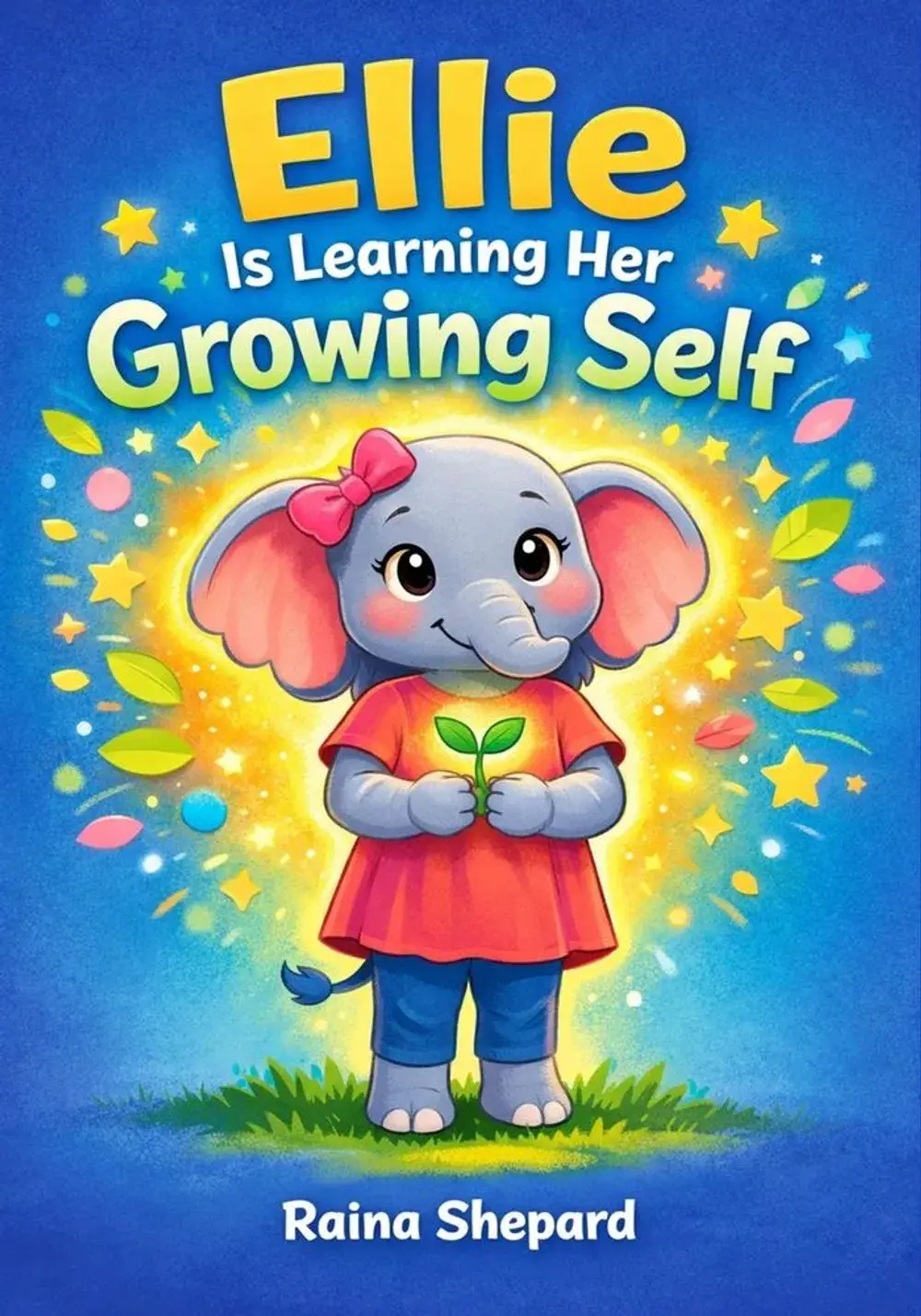
In Ellie Is Learning Her Growing Self, the sprout held close to Ellie becomes a quiet picture of development. A sprout is alive before it is tall. It does not need to prove its right to grow.
Children need that message too.
You are worthy while you are learning.
You are worthy before you have mastered the skill, repaired the conflict, or found the right words.
Fairy tales can teach emotional courage without becoming frightening
Magic gives children distance from their own experiences.
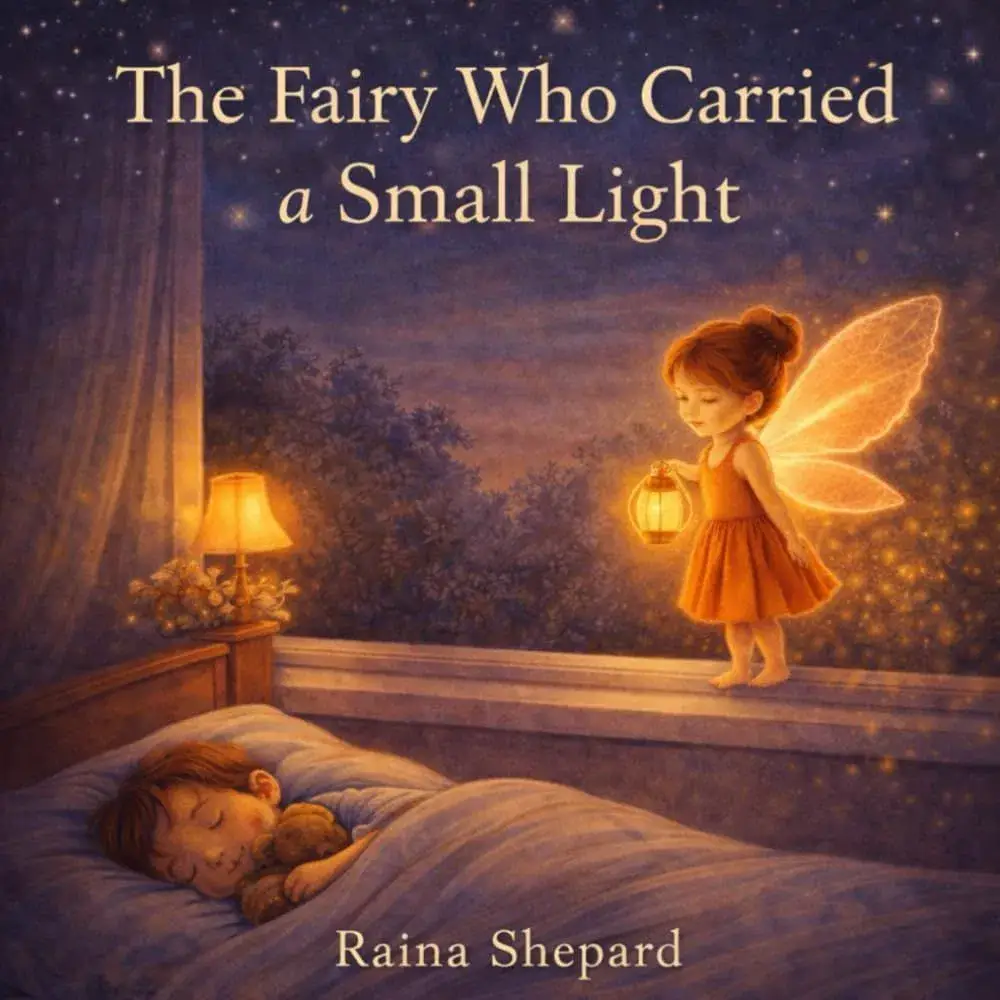
A fairy, forest, lantern, or hidden kingdom can hold a feeling that might otherwise seem too large to discuss directly. A child may not want to talk about their fear of the dark, but they may want to talk about a fairy who carries a small light. They may not be ready to explain loneliness, but they may understand a character waiting quietly beside someone who needs comfort.
The Fairy Glitterwhisp series uses magical adventure to explore kindness, empathy, and emotional growth. Its enchantment is not an escape from real feelings. It is a softer doorway into them.
In The Fairy Who Carried a Small Light, the glowing lantern suggests that courage does not always arrive as a blazing sun. Sometimes it is a small light held carefully through the dark.
That image can stay with a child.
Not every brave act is loud. Sometimes bravery is asking for help, trying again, telling the truth, or letting someone sit beside you while you cry. Stories that honor these quieter forms of courage help children understand that they do not have to be fearless to be worthy.
They only need to be human.
The Four Critters of Feelings gives children a language for inner experience
Stories become even more helpful when they connect to something children can use after the book is closed.
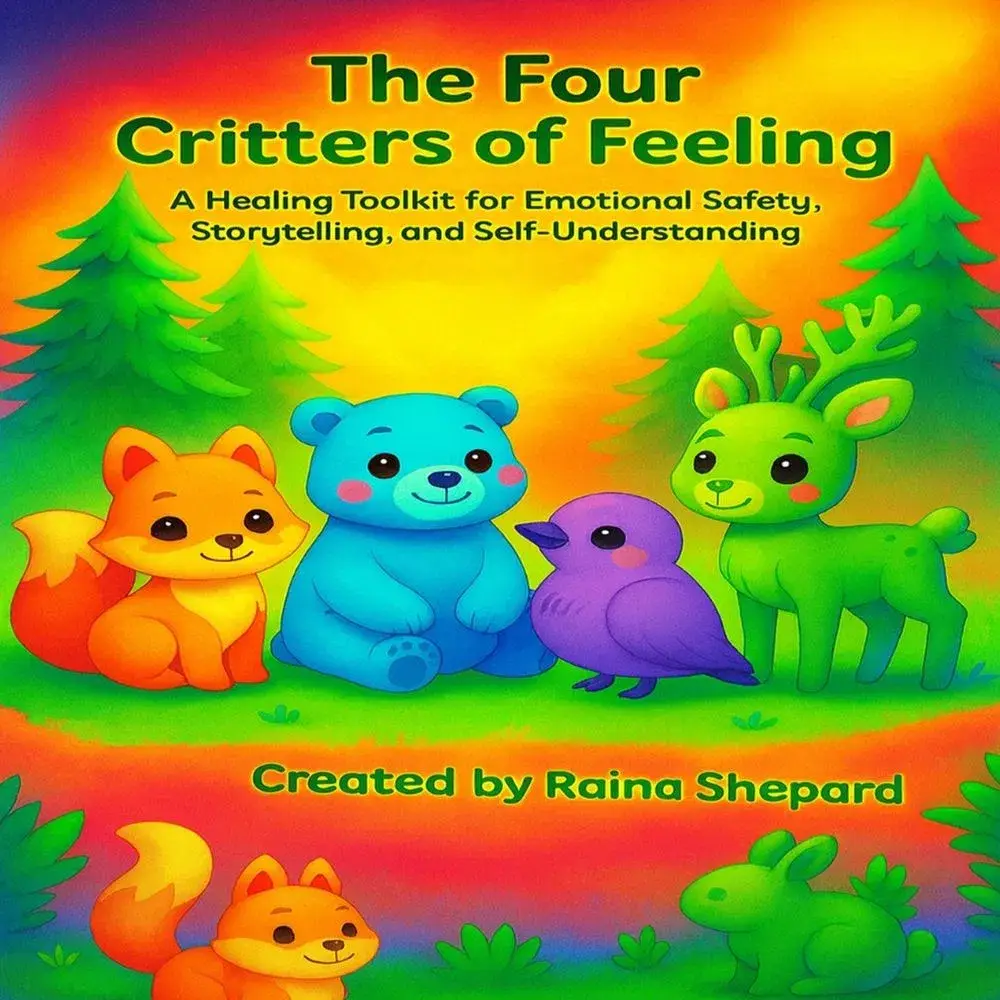
The Four Critters of Feelings healing toolkit offers a playful framework for emotional safety, storytelling, and self-understanding. Its four friendly animal characters give children a way to explore feelings without making the conversation feel clinical or intimidating.
A child may find it easier to say, “The fox feeling is here,” than to explain a complicated mixture of frustration, fear, and uncertainty. The characters can become companions: gentle symbols that help children notice what is happening inside.
You might ask:
- Which critter feels closest to you today?
- What does that feeling need?
- Is the feeling loud, quiet, heavy, or restless?
- What could help you feel a little safer?
- Has the feeling changed since we started reading?
There is no need to force an answer. The goal is not to extract a perfect emotional explanation. The goal is to create presence.
A child learns self-worth partly through the messages adults repeat, but also through the experience of being given time. When you remain curious instead of rushing to correct, you communicate: Your feelings are worth staying with.
What children absorb from the way you read
The book matters. So does the space around it.
A rushed reading can still be meaningful, especially on a busy night. You do not need a perfect ritual, a quiet house, or a long discussion after every page. Sometimes a child only wants to hear the story and lean against you.
However, small moments of conversation can help a story settle more deeply.
Try asking:
- “What do you think this character is feeling?”
- “Have you ever felt something like that?”
- “What would you want the character to know?”
- “Did the character make a mistake? Did that change their worth?”
- “What helped them feel safe enough to try again?”
Listen for the quiet emotions, too. A child may not be obviously upset. They may be unusually silly, distracted, silent, or eager to change the subject. The loud emotion is easy to notice, but the hidden one may be asking for care.
You do not have to turn every reading session into a lesson. In fact, children often absorb the deepest messages when they are not being tested.
Read slowly when you can. Let the illustrations breathe. Notice the character’s face. Allow a pause after a difficult page. Say, “That part felt big,” and wait.
Presence teaches.
The lasting message is not “You can handle everything”
There is a common misconception that self-worth grows when children are taught to be confident all the time.
It does not.
A child does not need to feel strong every day to believe they matter. They need to discover that their worth remains present through fear, confusion, failure, grief, and change.
That is what compassionate stories can offer.
Through Ellie, children can see that growth is gradual. Through Fairy Glitterwhisp, they can see that kindness and courage may be small, glowing, and persistent. Through The Four Critters of Feelings, they can begin to name the shifting weather inside them.
And through your steady voice beside the page, they learn something even more enduring:
They do not have to earn their place in the story.
They are already here. Already becoming. Already worthy of being heard, held, and loved, especially in the seasons when they are still learning how to believe it.