September 25, 2026
Two Homes, One Heart: Helping Kids Through Divorce With Gentle Stories
Divorce does not become easy just because the adults understand why it is happening. And children do not move through it neatly, one stage at a time, simply because someone says,…
Divorce does not become easy just because the adults understand why it is happening. And children do not move through it neatly, one stage at a time, simply because someone says, “Everything will be okay.”
That is the misconception worth setting down first.
Children may feel relieved and heartbroken in the same afternoon. They may ask practical questions about pajamas, school pickups, and where their favorite toy will sleep, while quietly wondering whether they are still allowed to love both parents. Their emotions can be loud, anger, sobbing, refusal, or almost invisible: a tight little smile, a stomachache before transitions, a sudden need to sleep with the light on.
When family life changes, children need more than explanations. They need language, steadiness, and the repeated experience of being loved in the middle of uncertainty.
Gentle stories can become a companion there.
Why stories help children understand divorce
Young children often feel something long before they can explain it. A child may know that the air in the house feels sharp. They may sense that adults are worried, even when conversations happen behind closed doors. They may carry guilt, confusion, longing, and loyalty all at once.
A story gives those feelings somewhere safe to land.
Through a character, a child can notice:
- “She misses her dad when she is at her mom’s house.”
- “He feels angry, but he still loves his family.”
- “Maybe I can feel two things at the same time, too.”
This is one reason children’s books about emotions can be so valuable during family transitions. They do not demand that a child disclose everything immediately. They offer a quiet doorway into conversation, reflection, and connection.
The right story does not rush toward a silver lining. It makes room for the ache first, then gently reminds a child that change is not the same as being abandoned.
Two homes can still hold one whole child
When a child begins moving between homes, even ordinary routines may feel unfamiliar. Different beds. Different rules. Different smells in the kitchen. A favorite cup left behind. A school project that travels in a backpack, along with feelings no one can see.
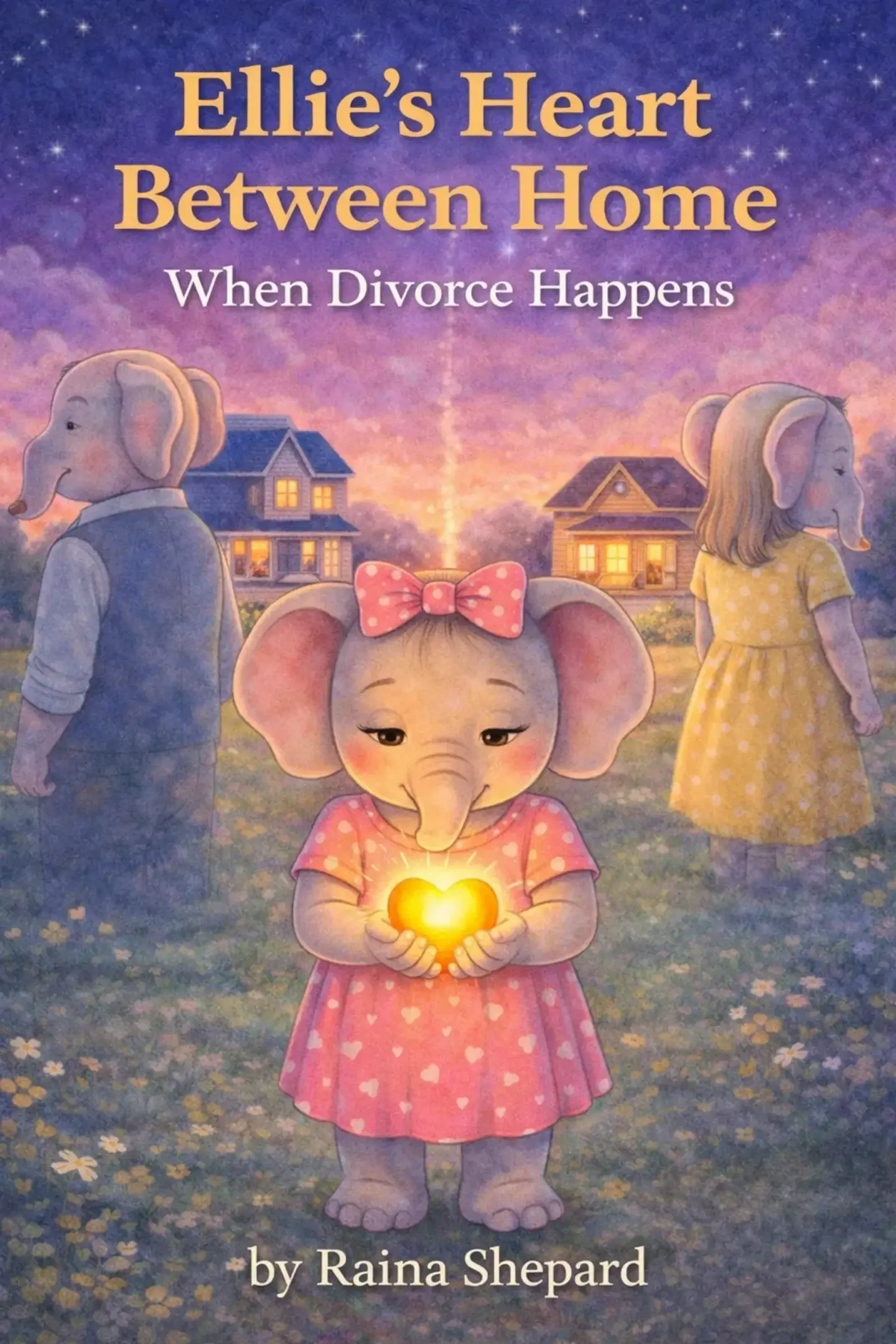
This is where Ellie’s Heart Between Homes: When Divorce Happens, part of Raina Shepard’s Ellie the Elephant series, can offer a tender starting point. In the story’s imagery, Ellie stands between two homes while holding a glowing heart. A simple visual reminder that her love and identity are not divided into pieces.
Children may need to hear this many times:
Your home life has changed, but you have not been split in two.
They may love one parent while missing the other. They may enjoy a new routine and still feel sad about what has ended. They may feel happy at one home and guilty for being happy at the other.
These mixed emotions are not signs of disloyalty. They are signs that the child’s heart is trying to remain connected while the shape of family changes.
Read slowly, without turning the book into a test
A child does not need to answer a long list of questions after every story. Sometimes the safest response is simply to read, close the book, and sit together in the soft quiet that follows.
You might say:
- “I wonder if any part of Ellie’s story felt familiar.”
- “Was there a feeling in the story you know?”
- “What part felt comforting?”
- “Would you like to talk, draw, or just sit with me?”
Try not to ask, “Are you sad because of the divorce?” That question can feel too large, too direct, or too much like an invitation to produce the “right” answer.
Instead, stay near the small details. Ask about the backpack. The bedtime routine. The hardest part of saying goodbye. The thing that helps the child feel settled after arriving at the other home.
Children often reveal the deepest feelings sideways.
Gentle books for complex emotions can build emotional vocabulary
Divorce rarely brings only one emotion. A child may experience grief for the family structure they expected, fear about the future, anger at both parents, relief from conflict, and worry about causing more pain.
They need words that are wide enough to hold all of that.
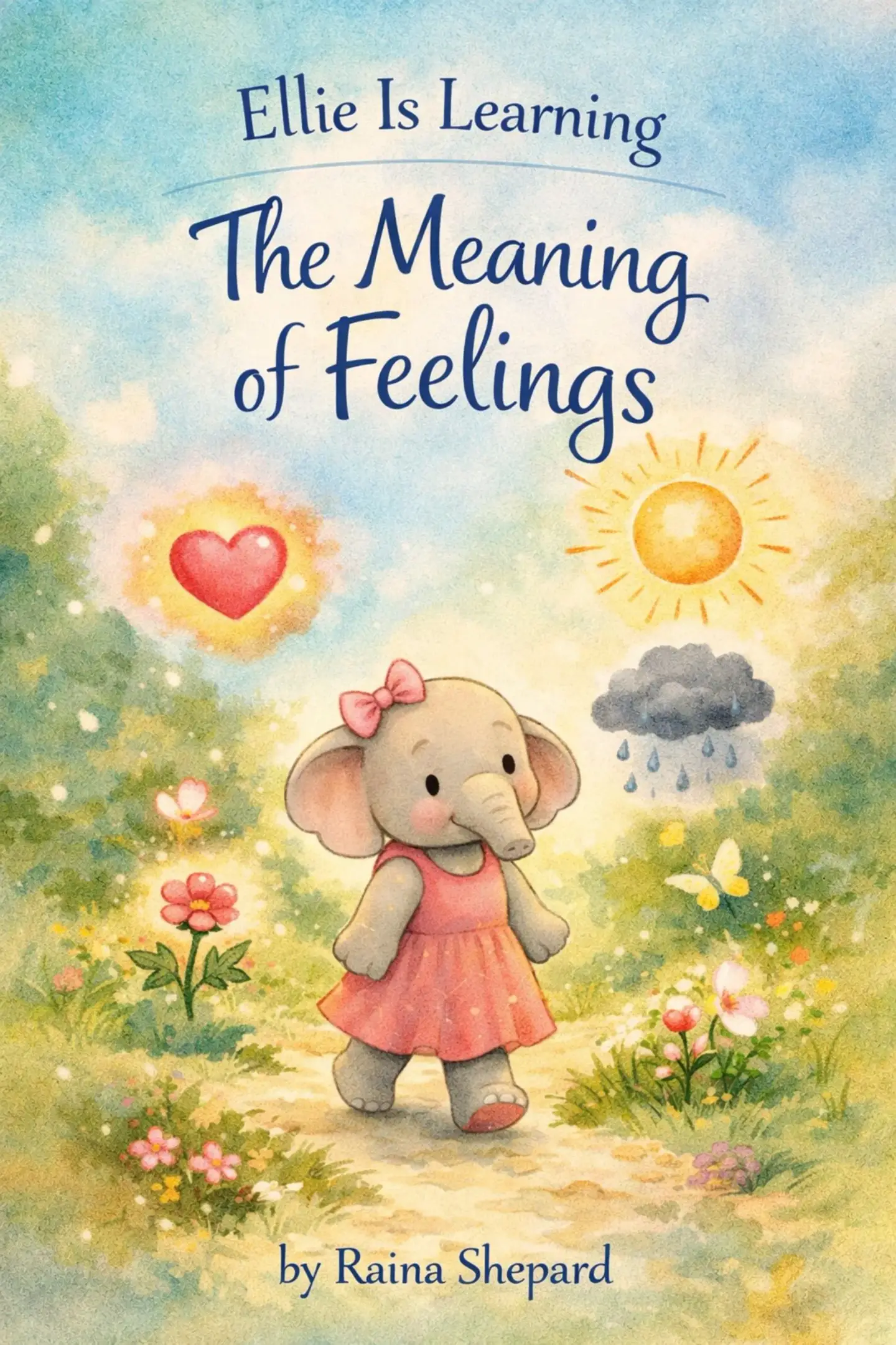
Raina Shepard’s The Four Critters of Feelings: A Healing Tool-Kit for Emotional Safety and Understanding can support this work by helping children notice and name their inner experiences. You might invite a child to choose the critter that best matches how they feel today, or choose one critter for each home.
There is no need to force a conclusion. The purpose is awareness.
You can say:
“Feelings can change from morning to afternoon. You do not have to pick just one.”
This matters because children sometimes believe that a feeling must be justified before it is allowed. They may think they cannot miss a parent if they had a good day with the other parent. They may think they must be cheerful to protect an adult’s feelings.
Naming emotions gently can loosen that pressure.
Keep self-worth separate from the separation
Children often personalize adult decisions. Even when you tell them repeatedly that the divorce is not their fault, the belief may return in quieter forms:
- “If I had behaved better…”
- “If I had not asked for so much…”
- “Maybe they would stay together if I were easier.”
A child may not say these thoughts aloud. They may become unusually helpful, watchful, or eager to keep everyone calm. They may take responsibility for adult moods, carrying vigilance, explanation, and constant adjustment on small shoulders.
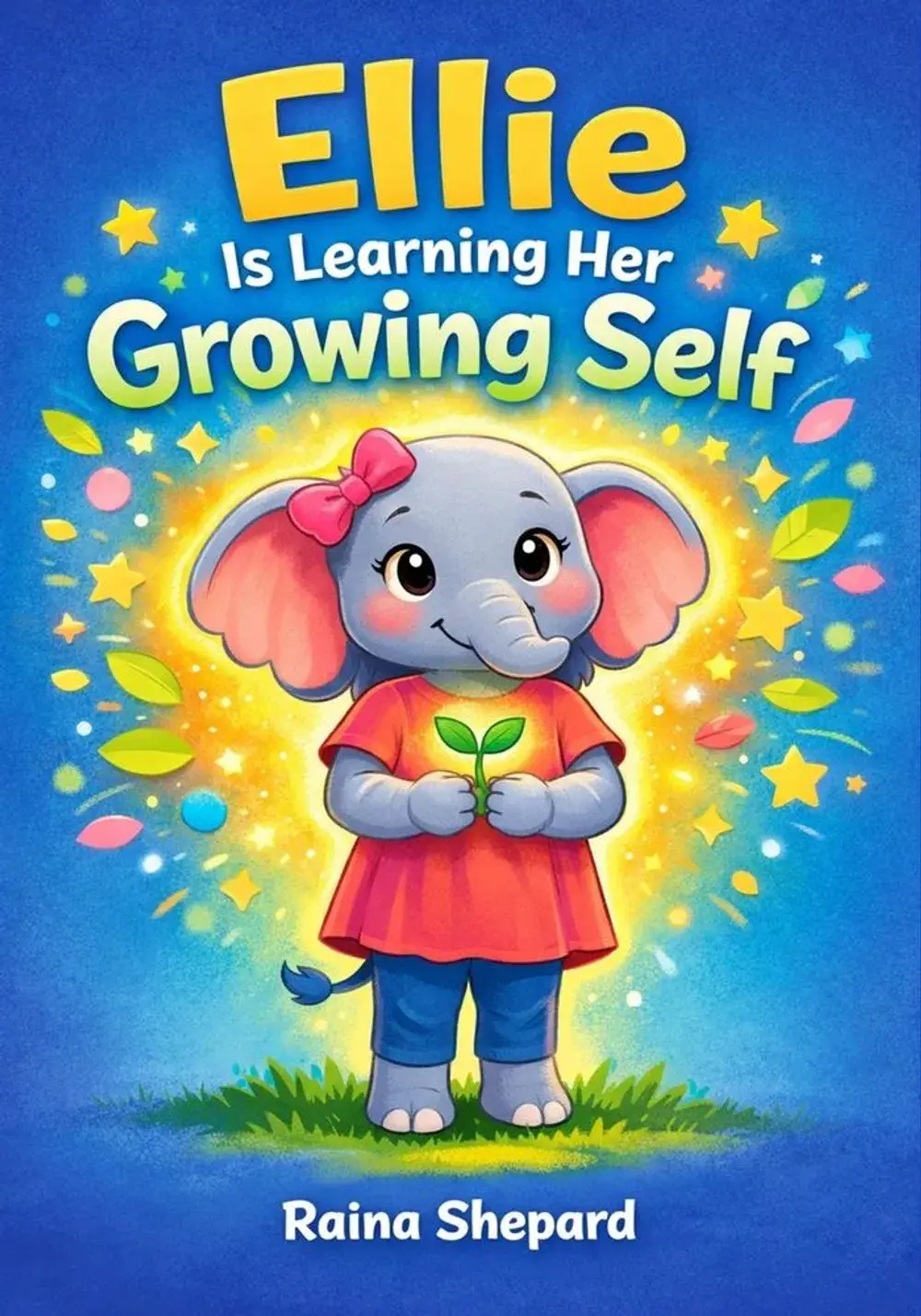
This is why books for self-worth kids can be helpful alongside divorce-focused stories. Ellie Is Learning Her Growing Self offers an opportunity to talk about identity as something that continues growing through change.
Remind your child:
“The adults are responsible for the adult decisions. You are responsible for being a child.”
And:
“You do not have to fix our feelings. You are loved because you are you, not because you make things easier.”
Say it plainly. Say it often. Children absorb reassurance through repetition.
When grief is part of the family change
Divorce can involve a kind of grief even when everyone is still alive. A child may grieve the loss of shared breakfasts, family holidays, a familiar bedroom, or the belief that home would always look one particular way.
Sometimes divorce also occurs alongside another loss: the death of a loved one, a move, the loss of a pet, or the disappearance of a relationship. In those seasons, books for kids about grief can help children understand that sadness may return in waves.
Raina Shepard’s Ellie Learns About Grief can be used as a supportive resource when a child is carrying more than one kind of loss. You might say:
“Grief is what we feel when someone or something important has changed or is no longer with us in the same way.”
You do not have to make grief disappear. You can help a child feel less alone inside it.
What to say tonight: simple scripts for tender moments
You do not need a perfect speech. You need a calm voice and a willingness to repeat yourself.
If your child says, “Is this my fault?”
“No. This is an adult decision. Nothing you said, did, or felt caused the divorce.”
If your child says, “I miss Mom when I’m with Dad.”
“That makes sense. You can miss one parent and still enjoy time with the other. Your love does not have to choose.”
If your child says, “I don’t want to go to the other house.”
“Transitions can feel hard. I will help you get ready, and we can think about one comforting thing you can bring or do when you arrive.”
If your child says, “Are we still a family?”
“Yes. Our family is changing, but you are still part of this family. You are loved in both homes.”
If your child will not talk
“You do not have to talk right now. I am here when you are ready. We can read, draw, take a walk, or sit together.”
The goal is not to create one magical conversation. It is to become a steady presence across many ordinary ones.
Small routines can make two homes feel safer
Predictability is soothing when everything else feels uncertain. If possible, create a few shared anchors between homes:
- A familiar bedtime phrase or song.
- A small comfort object that travels with the child.
- A simple visual calendar for transitions.
- The same reassurance: “You are loved. You are safe. This is not your fault.”
- A place for the child to keep drawings, questions, and feelings.
Educators can offer similar steadiness at school. A private check-in, a quiet space, or permission to keep a small family photo in a backpack may help a child feel less alone. A school counselor or trusted teacher can also use stories to open discussion without asking the child to share personal details publicly.
For additional classroom ideas, this guide for supporting students through divorce and family changes offers book-based activities and family support suggestions.
And if a child’s distress remains intense or begins affecting sleep, eating, learning, friendships, or daily functioning, reaching out to a pediatrician, school counselor, or qualified mental-health professional is a caring next step.
Love can remain present while life changes shape
Healing is not a straight road from sadness to happiness. It is the middle ground: the morning when your child laughs and then cries at bedtime; the week when transitions go smoothly, followed by a sharp, unexpected question; the slow discovery that a heart can stretch without breaking.
Stories cannot solve divorce.
But a gentle story can place a warm light beside a difficult feeling. It can help a child recognize, “Someone else has felt this.” It can give a parent words when their own voice is tired. It can remind an educator that quiet behavior may contain a whole weather system underneath.
Two homes may ask a child to adjust to new rhythms, new rooms, and new goodbyes. But with patient presence, honest reassurance, and compassionate books, a child can learn something enduring:
Their family may change shape, but their heart still belongs, and it is still whole.