August 26, 2026
The Proven 5-Step Framework for Breaking Unhealthy Patterns for Good
Healing is not a clean staircase from pain to peace. You do not simply identify an unhealthy pattern, make one brave decision, and become someone new by morning. That is the…
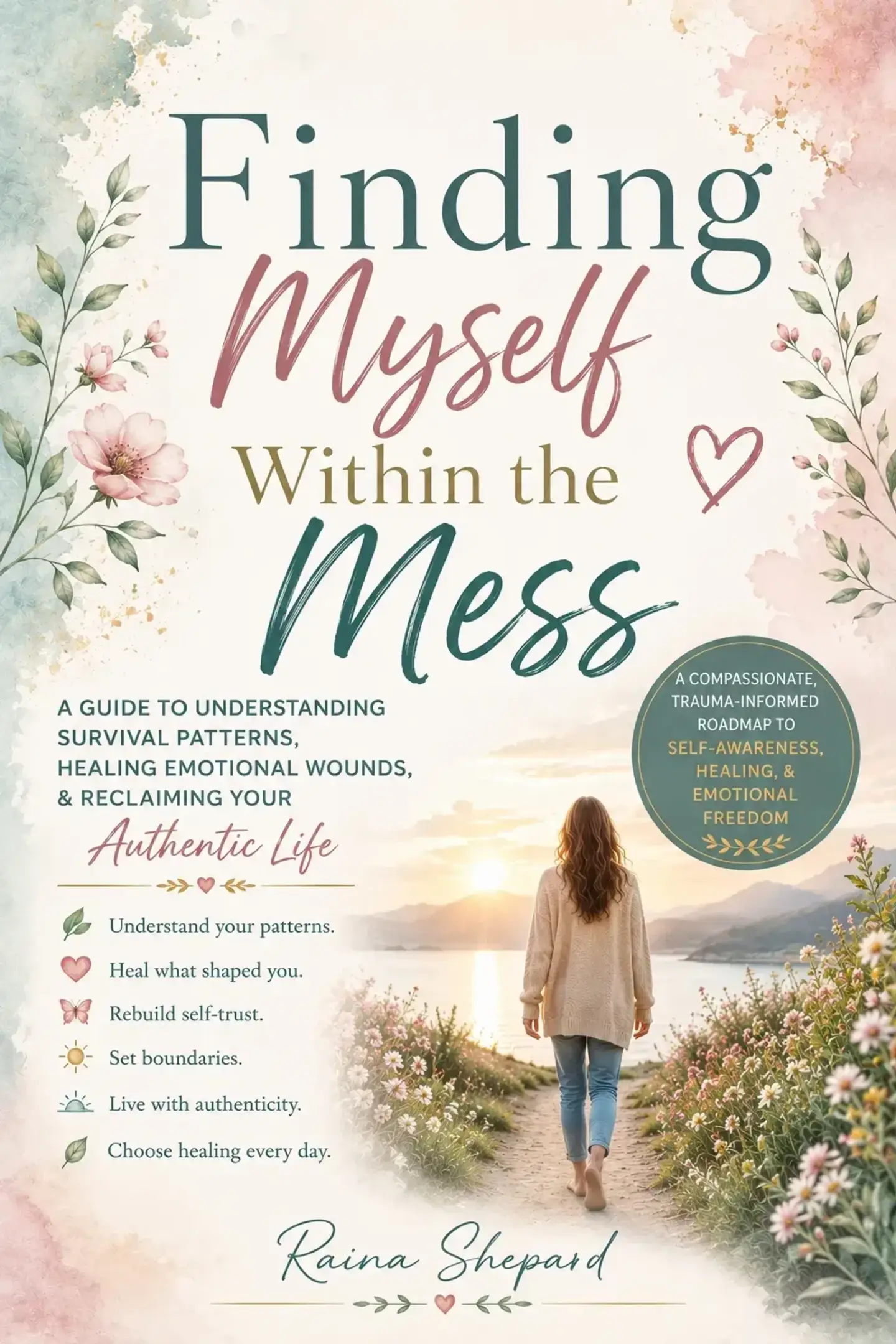
Healing is not a clean staircase from pain to peace. You do not simply identify an unhealthy pattern, make one brave decision, and become someone new by morning.
That is the misconception.
Real transformation is quieter and more uneven. It may look like noticing the familiar ache before you answer the text, pausing before you rescue someone, or realizing that the frantic need to be chosen is not the same as love. You may move forward, circle back, and discover another layer of the same wound waiting for gentle attention.
Still, patterns can change.
If you are searching for breaking unhealthy patterns books or books on personal transformation, you are likely looking for more than instructions. You may be looking for language, something that helps you understand why you keep returning to what hurts, why saying no feels sharp and dangerous, or why peace can feel strangely unfamiliar.
This five-step framework is not a quick fix. It is a compassionate map for the middle ground of healing: the place where you are no longer willing to live as you once did, but do not yet feel entirely free.
1. Name the Pattern Without Shaming Yourself
You cannot change what remains invisible.
The first step is awareness, not accusation. You begin to observe the recurring sequence beneath the individual moments: vigilance, explanation, and constant adjustment; giving, waiting, and feeling quietly resentful; pulling away, longing for closeness, and then retreating when it arrives.
Perhaps you recognize yourself in patterns such as:
- People-pleasing to prevent rejection or anger
- Rescuing others from consequences they need to face
- Choosing emotionally unavailable relationships
- Apologizing when you have done nothing wrong
- Ignoring your needs until they become resentment
- Confusing anxiety with chemistry
- Believing your worth depends on being useful
The pattern may have once protected you. That matters.
If you learned early that other people’s moods determined your safety, becoming highly attuned to them was not foolish. It was adaptive. If you were praised for being easy, helpful, mature, or endlessly forgiving, you may have learned to abandon yourself so everyone else could remain comfortable.
Understanding the origin does not mean excusing harm. It means replacing contempt with context, however.
Try asking yourself:
What usually happens just before I abandon my own needs?
Then notice the body. Does your chest tighten? Does your stomach drop? Does a hot, urgent energy push you to explain, fix, call, give, or stay? Your body may recognize the pattern before your conscious mind has words for it.
You are not looking for a perfect diagnosis. You are learning to tell the truth gently.
2. Create Safety Before You Demand Deep Healing
Awareness can open a door, but it does not automatically make the room safe.
Many people discover their patterns and immediately expect themselves to confront every painful memory, end every difficult relationship, and set flawless boundaries. That pressure can make healing feel like another performance, another place where you must succeed or be disappointed in yourself.
Before you go deeper, stabilize.
Stability may include regular meals, sleep, movement, quiet, supportive connection, and fewer situations that leave you emotionally flooded. It may mean reducing contact with someone who repeatedly threatens, manipulates, or harms you. If you are in immediate danger, prioritize physical safety and reach out to local emergency services or a qualified domestic-violence resource.
Safety is not selfish. It is the soil where self-trust begins to grow.
Start with one small daily check-in:
- What am I feeling?
- What do I need?
- What is mine to carry today, and what belongs to someone else?
The answers may be surprisingly ordinary. You might need rest, honesty, space, food, reassurance, or help. You might need to stop answering a conversation that has become cruel. You might need to let someone be disappointed without rushing to repair their feelings.
A boundary does not have to be dramatic. It can be a sentence spoken in a low, steady voice:
“I’m not available for that.”
“I need time to think before I answer.”
“I care about you, but I cannot take responsibility for this.”
At first, your body may respond with guilt. Guilt is not always a sign that you have done something wrong. Sometimes it is simply the emotional afterimage of an old role.

3. Heal the Wound Beneath the Behavior
The behavior is often only the visible edge of the story.
Under people-pleasing, there may be a terror of being left. Under control, there may be a history of helplessness. Under emotional numbness, there may be grief so deep that feeling it once seemed impossible.
This is where healing becomes tender.
You may begin exploring the roles you held in your family or early relationships: caretaker, peacemaker, invisible child, achiever, confidante, or the one who never caused trouble. These roles can follow you into adulthood, shaping your relationships, your work, your spirituality, and the way you speak to yourself when no one else is listening.
Ask:
- What did I have to become in order to feel loved or safe?
- Which emotions were welcomed, and which were punished or ignored?
- What did I learn about needing help?
- Whose approval still feels like a verdict?
You do not have to answer these questions all at once. Some truths need to arrive slowly, like light entering a room after a long night.
Trauma-informed therapy can offer support as you work with painful memories, intense triggers, or dissociation. Journaling, grounding exercises, gentle movement, and inner-child practices may also help you reconnect with feelings that were pushed aside. If a practice makes you feel overwhelmed or less present, pause and seek qualified support rather than forcing yourself through it.
The goal is not to relive the past endlessly. It is to understand the past well enough that it no longer has to direct every present choice.
4. Practice New Choices in Small, Repeated Ways
Insight is meaningful, but repetition is what teaches your life a new rhythm.
You may understand that you over-function in relationships and still feel the urge to send the long message. You may know that you deserve reciprocity and still be drawn to someone who offers occasional tenderness surrounded by absence. You may recognize that you are exhausted and still reach automatically for another person’s crisis.
This does not mean you are failing. It means the old pattern has had practice.
New choices also need practice.
Instead of explaining your boundary five different ways, state it once and allow the silence that follows. Instead of offering unsolicited advice, ask, “Do you want support, or do you want me to listen?” Instead of making a decision based on someone else’s approval, write down what aligns with your values.
You are slowly moving from reaction to response.
A useful weekly practice is to choose one behavior to notice and one replacement to try:
| Old pattern | New practice |
|---|---|
| Saying yes immediately | “Let me check my schedule and get back to you.” |
| Fixing another adult’s problem | Offer support without taking over. |
| Hiding your preferences | Name one honest want each day. |
| Over-explaining a no | Give a clear answer without defending it. |
| Chasing inconsistent attention | Look for steady, mutual connection. |
The new behavior may feel awkward, even cold, at first. Healthy boundaries can feel unnatural when self-abandonment has felt like kindness. Keep listening to the deeper signal: Does this choice leave you more whole, more truthful, more present?
That is often where the new life begins.

5. Integrate Spiritual Growth Into Ordinary Life
Spiritual growth is not an escape from your humanity.
It is not pretending that everything happens for a reason while your heart is still aching. It is not becoming endlessly calm, endlessly forgiving, or impossible to hurt. Sometimes spiritual growth is simply learning to remain present with yourself when the old impulse says to disappear.
You might understand “spiritual” as prayer, meditation, nature, intuition, a Higher Power, creative work, or a quiet relationship with your deepest values. The language can be personal. The movement is similar: from compulsive control toward trust, from isolation toward connection, from performance toward presence.
Try creating a small practice that you can return to:
- Sit quietly for five minutes and notice what is true today.
- Take a slow walk without turning it into a productivity task.
- Write one sentence about the person you are becoming.
- Read something that reminds you of your inherent worth.
- Offer service without using helpfulness to earn love.
- End the day by naming one moment when you stayed connected to yourself.
Spiritual integration also means accepting that you are part of an ongoing season. There will be days when you feel clear and days when the old fear returns with a sharp voice. There will be relationships you outgrow, grief you revisit, and versions of yourself you must release with compassion.
Progress may look less like permanent certainty and more like returning sooner.
Returning to your body. Returning to your values. Returning to the quiet truth that another person’s anger does not define you, and another person’s need does not erase your own.
A Gentle Framework for the Week Ahead
You do not have to transform your entire life this week. Choose one step and make it small enough to practice.
Monday: Name one pattern without judgment.
Tuesday: Notice what your body feels before you react.
Wednesday: Meet one basic need before tending to someone else’s.
Thursday: Practice one clear boundary.
Friday: Write about the wound beneath the behavior.
Saturday: Make one values-based choice.
Sunday: Reflect on where you returned to yourself.
Books can be companions in this process. In Raina Shepard’s spiritual and self-help series, Codependency: Healing the Hard Part explores the difficult work of loosening survival patterns and reclaiming your life. Love Without Swords speaks to boundaries, protection, and the possibility of love without self-erasure. Untangled offers another doorway into the work of finding clarity when your inner world feels knotted and tired.
You may also find community through Co-Dependents Anonymous, a peer-support fellowship centered on recovery from codependent behaviors and relationships. A book, a meeting, a therapist, or one honest conversation can become a steady companion: but none of them need to become another authority you abandon yourself to follow.
The framework is simple. The living of it is not.
You are learning to notice, protect, understand, choose, and trust. You are learning that healing does not require you to become untouched by pain. It asks you to stop leaving yourself alone inside it, however.
And slowly, through ordinary decisions made again and again, the pattern begins to loosen. Not because you forced yourself into a new identity, but because you kept returning to the person who was there all along.