September 20, 2026
The Codependency Loop: Why You Keep Landing in the Same Relationship
You do not keep choosing painful relationships because you are foolish, weak, or incapable of recognizing love. That is the first misconception to set down. Sometimes, what you…
You do not keep choosing painful relationships because you are foolish, weak, or incapable of recognizing love.
That is the first misconception to set down.
Sometimes, what you call “bad judgment” is a deeply learned pattern of survival. Sometimes the sharp, frantic pull toward someone unavailable feels like chemistry because your nervous system recognizes the uncertainty. Sometimes being needed feels safer than being known, and rescuing someone feels easier than asking whether they can truly meet you.
The codependency loop is rarely loud at first. It may begin with compassion, intensity, or the intoxicating relief of feeling essential. You notice their wounds. You understand their silence. You explain their behavior to friends, to yourself, and eventually to the aching place inside you that keeps whispering, If I love them well enough, maybe everything will settle.
But love cannot heal what another person refuses to face.
And you cannot keep abandoning yourself in the hope that someone else will finally learn how to stay.
What is the codependency loop?
Codependency is not a formal diagnosis with one universal checklist. It is better understood as a relationship pattern in which your identity, safety, or self-worth becomes overly tied to another person’s needs, moods, choices, or approval.
You may become the caretaker, the fixer, the translator, or the emotional weather station. You watch their face. You measure their tone. You anticipate the next crisis before it arrives.
Then they become the person who needs your labor, your forgiveness, your money, your explanations, or your constant emotional availability.
The roles reinforce each other.
Their instability activates your caretaking. Your caretaking protects them from consequences. Their dependence makes you feel important, while your over-functioning allows them to remain under-functioning. For a while, the arrangement can feel like devotion, loyalty, and purpose.
Then resentment arrives.
Quietly at first. A clenched jaw. A tired body. A calendar emptied of your own plans. A private grief you cannot explain because, on paper, you are the one who “has it together.”
According to HelpGuide’s overview of codependency, common signs can include difficulty stating your needs, taking excessive responsibility for another person, tolerating harmful behavior, and feeling guilty when you focus on yourself. The details vary, but the central ache is often the same: you are present in the relationship, yet increasingly absent from your own life.
Why do you keep landing in the same dynamic?
1. Familiarity can disguise itself as love
Your nervous system does not always choose what is healthiest. It often reaches for what is familiar.
If you grew up monitoring an unpredictable parent, soothing conflict, hiding your feelings, or earning affection by being useful, you may have learned that closeness requires vigilance, explanation, and constant adjustment. A calm relationship can feel strangely empty at first. A partner who communicates clearly may seem less exciting than someone whose attention arrives in hot-and-cold waves.
This does not mean you want pain.
It means your body may confuse uncertainty with intimacy because uncertainty once demanded your full attention.
You learned to call the tension “love” because tension was where you had to work hardest to belong.
2. Being needed may have become your identity
When you have spent years surviving through caretaking, the idea of stepping back can feel frightening rather than freeing.
Who are you if you are not solving the emergency? Who are you if nobody needs your advice, your forgiveness, or your sacrifice? Who are you when you are no longer managing another person’s emotions?
These questions can feel stark.
A codependent relationship may give you a role that is painful but familiar: the responsible one, the understanding one, the patient one. You may receive praise for your strength while quietly becoming exhausted by it. You may be called generous while your own needs grow faint, distant, and difficult to name.
This is one reason breaking unhealthy patterns requires more than recognizing a red flag. You are not only changing a relationship. You are grieving an identity that once helped you survive.
3. You may be trying to finish an old story
Sometimes you return to the same kind of relationship because part of you hopes to create a different ending.
You may choose an emotionally unavailable person and try to become impossible to abandon. You may love someone chaotic and hope your loyalty will finally inspire stability. You may keep offering understanding to someone who keeps hurting you because, somewhere underneath the present moment, you are still waiting for an old wound to be repaired.
This is not a moral failure. It is a tender, unconscious wish.
You want the person who resembles the original source of your pain to become the person who proves you were always worthy of love. But the relationship usually cannot carry that burden. No partner can go back in time and rewrite what happened to you.
Healing begins when you stop asking a familiar person to give you an unfamiliar ending.
The quiet signs you may be losing yourself
Not every codependent relationship looks dramatic. Some are filled with shouting and threats. Others look polished from the outside, but inside, you feel hollowed out by small daily compromises.
You might notice that:
- You cancel plans because you are afraid your partner will be upset.
- You feel guilty resting, spending money, or enjoying time alone.
- You monitor their mood before sharing your own.
- You make excuses for behavior you would never accept from someone you love.
- You confuse supporting someone with managing their life.
- You feel responsible for whether they are angry, sober, successful, or emotionally regulated.
- You have difficulty remembering what you wanted before the relationship.
- You keep waiting for their potential to become their pattern.
The loud emotions are easy to identify: panic, rage, desperation, and grief.
The quieter ones can be more revealing: numbness, self-doubt, emotional fatigue, and the peculiar loneliness of being partnered but unseen.
As the Cleveland Clinic explains, a relationship can become unhealthy when one person gives disproportionate time, energy, and focus while losing sight of their own values and responsibilities. A loving relationship should not require you to disappear in order for someone else to remain comfortable.

Breaking the loop begins with a pause
You do not have to transform your entire life in one dramatic gesture.
In fact, healing often happens in the middle ground: between recognition and release, between the first boundary and the guilt that follows, between knowing what you deserve and learning to tolerate receiving it.
Begin by pausing before you rescue.
Ask yourself:
- Am I helping, or am I preventing this person from facing a consequence?
- Did they ask for support, or did I assume responsibility?
- What am I feeling right now, beneath the urgency?
- What would I choose if I were not afraid of their disappointment?
The pause may feel small. It is not.
A pause creates space between the old trigger and the old response. In that space, you can begin to hear your own voice again.
Boundaries are not punishments
A boundary is not a weapon. It is not a threat designed to force someone else to change.
A boundary is a clear statement about what you will do to protect your emotional, physical, financial, or spiritual well-being.
You might say:
- “I care about you, but I will not lie to cover for you.”
- “I am willing to listen, but I cannot solve this for you.”
- “I will not continue this conversation while I am being insulted.”
- “I need time alone tonight, and I am not going to apologize for needing it.”
The other person may not welcome your boundary. They may become angry, wounded, persuasive, or suddenly affectionate. That reaction can make you question yourself, but discomfort does not automatically mean you have done something wrong.
Sometimes the old relationship system resists your healing because your healing changes the arrangement.
Rebuilding a self outside the relationship
A healthier relationship with another person begins, slowly, with a more honest relationship with yourself.
Return to the parts of your life that became dim: friendships, creative interests, rest, movement, faith, curiosity, and unstructured time. Make one decision each day based on your own preference rather than someone else’s reaction.
It may feel selfish at first.
That feeling is not proof that you are selfish. It may simply be the sensation of practicing freedom after years of emotional over-responsibility.
You can also create a timeline of your relationships. Notice what repeats: the unavailable partner, the crisis, the rescuing, the apology, the temporary closeness, the next collapse. Look for the moment when you begin to over-explain, over-give, or abandon your standards.
The goal is not to shame yourself for the pattern.
The goal is to recognize the doorway.
Books for the road back to yourself
Raina Shepard’s self-help books are written for the wounded and the searching: for the part of you that wants insight, but also tenderness.
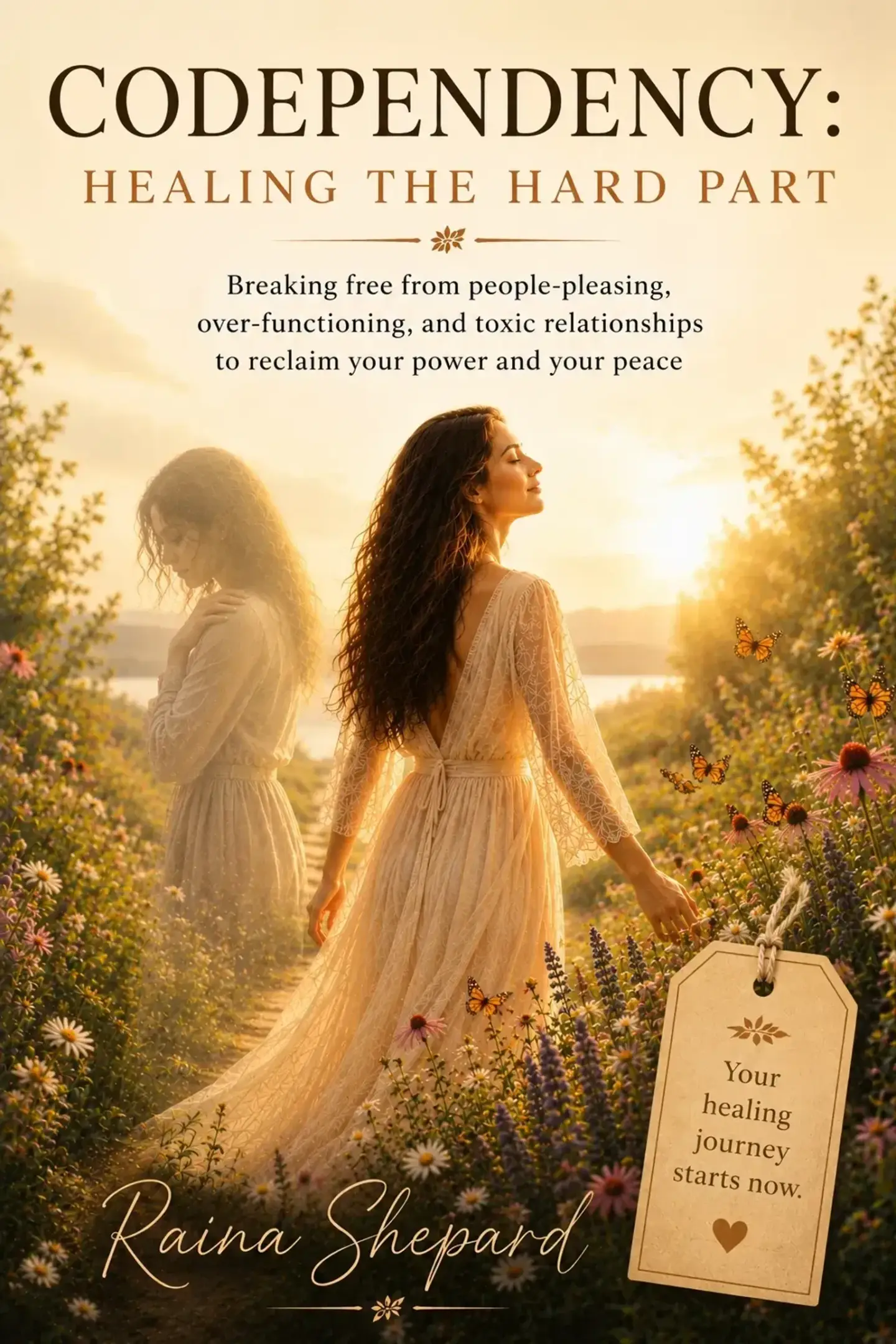
In Codependency: Healing the Rough Spots, the focus is on seeing the uneven places where love, responsibility, guilt, and self-abandonment become tangled. Love Without Swords explores the strength of setting boundaries without turning your heart to stone.

In Untangled: The Lies Love Told Me & Getting It Right This Time, you are invited to examine the stories love taught you and consider what it might mean to relate from awareness rather than repetition.
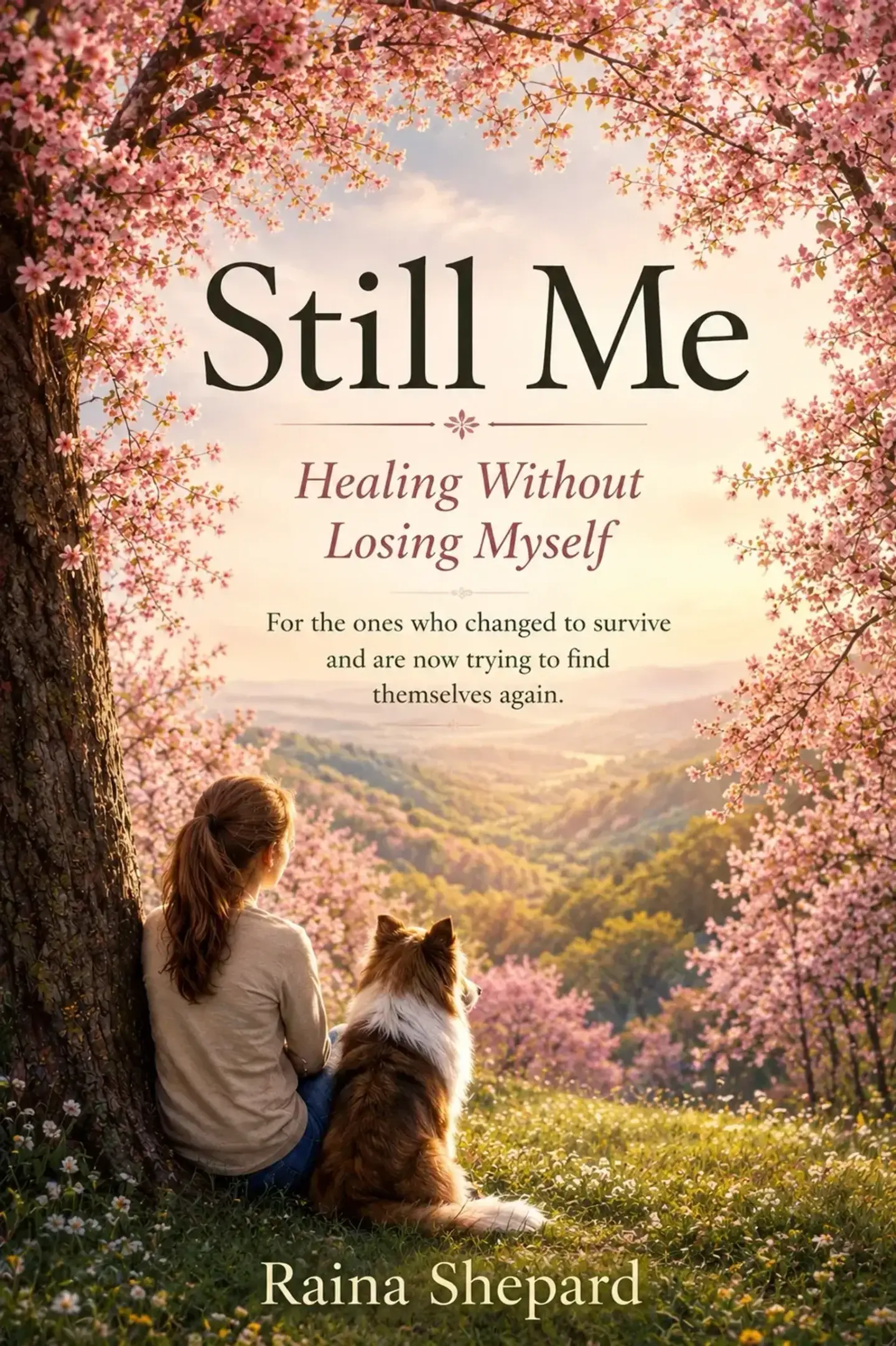
And Still Me: Healing Without Losing Myself speaks to the tender center of recovery: you can change your patterns without erasing your softness. You can become more discerning without becoming cold. You can leave behind an old role and still remain compassionate, soulful, and fully yourself.
You can explore more of Raina Shepard’s healing-focused writing on the books page and in the shop.
You are allowed to choose differently
Breaking the codependency loop does not mean you will never feel drawn to someone wounded, complicated, or in need of support.
It means you begin to ask whether the relationship has room for two whole people.
You can love someone without carrying their life. You can offer compassion without offering unlimited access to your energy. You can understand why someone behaves as they do without using that understanding to excuse what harms you.
The first healthy relationship you build may be with your own no.
Then your own quiet.
Then your own uncertain, returning voice.
At first, it may sound faint beneath the old habits of vigilance, explanation, and constant adjustment. Keep listening. It is still there.
You are not here to become harder.
You are here to become present enough to stay with yourself, however the next season unfolds.
If you are experiencing abuse, threats, coercive control, or immediate danger, consider contacting a trusted person or a local domestic-violence resource. Healing and boundary work should be supported by safety. A licensed mental-health professional can also help you explore trauma, attachment, and recurring relationship patterns with care.