September 20, 2026
Ritual, Journaling, and Reading: Three Gentle Practices That Settle Your Nervous System
Healing does not begin when you finally become calm, disciplined, or spiritually enlightened. You do not need to rise above your feelings to find your way back to yourself.…

Healing does not begin when you finally become calm, disciplined, or spiritually enlightened. You do not need to rise above your feelings to find your way back to yourself. Sometimes healing begins much more quietly, with a familiar cup of tea, a few honest lines in a journal, or a book that sits beside you without asking anything in return.
Your nervous system notices repetition. It notices warmth, rhythm, and presence. It notices when you return to the same chair, light the same candle, open the same kind of page, and give yourself permission to be here without performing wellness.
This is not a quick fix. It is a companionable way of creating small pockets of steadiness when the inner world feels sharp, frantic, or far away.
When you are dysregulated, you may feel restless and overstimulated. Your thoughts may race ahead, searching for danger, answers, or the next thing to repair. Or you may feel the opposite: numb, heavy, and strangely distant from your own life. These states can be loud, but they can also be subtle: a clenched jaw, shallow breathing, a low ache behind the ribs, or the persistent feeling that you should be doing more.
Ritual, journaling, and reading cannot remove every difficult circumstance. They can, however, offer your body and spirit a more reliable message: You are not abandoned here.
1. Ritual: Give Your Body Something Kind to Expect
A ritual is not the same as a rigid routine. A routine tells you what must get done. A ritual helps you remember that you are a person living through a particular season.
The most useful ritual may be very small. You might make tea before bed, sit by a window for five minutes in the morning, place your feet on the floor before opening your phone, or light a candle before you write. The objects themselves are not magical. Their meaning grows through repetition.
Your body begins to recognize the sequence:
- The cup warms your hands.
- The chair supports your weight.
- The light softens the room.
- The next few minutes belong to you.

This kind of predictability can be especially comforting when life has felt uncertain. You are not asking yourself to feel peaceful immediately. You are simply creating a gentle doorway into the present.
Try building a ritual with three parts:
- Arrive. Notice your feet, the chair beneath you, the temperature of the air, and one sound in the room.
- Attend. Choose one quiet activity: breathing, journaling, prayer, stretching, or reading.
- Close. Drink water, wash your cup, step outside, or place your journal away.
The closing matters. Without it, emotional reflection can leave you feeling open and unfinished. A small ending tells your system that you can visit difficult feelings without becoming lost inside them.
Your ritual does not need to look spiritual from the outside. It only needs to help you feel a little more present within yourself.
2. Journaling: Let the Unnamed Become Speakable
When your inner life is crowded, every thought can feel equally urgent. Journaling gives the noise somewhere to land.
You do not need beautiful handwriting, profound insight, or a perfectly chosen notebook. You do not even need to know what you feel before you begin. You can start with the truth that is closest to the surface:
- “My body feels…”
- “The thought I keep returning to is…”
- “What I am afraid will happen is…”
- “What I need but have not said is…”
- “One thing that feels manageable today is…”
Writing can create a little distance between you and the experience. The fear is still real. The grief is still aching. But it is no longer moving through your mind without shape or boundary.
Research on expressive writing suggests that putting difficult experiences into words may support emotional processing and reduce distress for some people, although the effects are gradual and not the same for everyone. You can read a research review on expressive writing and health or explore a science-supported journaling protocol.
The gentlest place to begin is often the body.
Notice whether your shoulders are lifted, your stomach is tight, your chest feels hollow, or your hands are restless. Describe the sensation without demanding an explanation. “There is pressure in my throat” is enough. “I feel heavy behind my eyes” is enough. You are practicing attention, not trying to solve your entire history before breakfast.
If you feel steady, you might continue with three simple questions:
- What happened?
- What did it stir in me?
- What would support me now?
The third question keeps journaling from becoming an endless excavation. You are allowed to understand the wound while also asking what care is possible today: rest, a boundary, a conversation, food, movement, prayer, or professional support.

You may also use a short time container. Set a timer for five or ten minutes. Write about one subject only. When the timer ends, look around the room and name a few ordinary things you see. Feel the floor beneath your feet. Let the practice finish.
If writing makes you feel panicked, dissociated, or overwhelmed, stop. You do not have to push through. Emotional healing is not measured by how much pain you can revisit alone.
3. Reading: Borrow a Steadier Voice
There are times when your own thoughts are too close to hear clearly. Reading can offer a different kind of companionship.
A meaningful book does not always give you answers. Sometimes it lends you language for an experience you have carried silently. Sometimes it reminds you that another person has also stood in uncertainty, longing, grief, or transformation. Sometimes a single paragraph gives your mind a place to rest.
This is part of why spiritual growth books for adults can become more than information. They can become mirrors, lanterns, and quiet companions. They allow you to consider your life from a little farther away without abandoning the tenderness of what you are living through.
Raina Shepard’s spiritual series (including The Life of a Mystic, Touched by the Angels, and The Chosen) can be approached in this spirit. You do not have to read quickly or finish a chapter in one sitting. You can read a page, pause, and ask:
- “What part of me responded to this?”
- “What truth feels comforting, challenging, or unfinished?”
- “What would it mean to carry this idea gently today?”

Choose books that meet you where you are. If you feel raw, a book filled with intensity may not be the right companion that day. If you feel numb, a story with emotional warmth may help you begin to feel contact with yourself again. There is no morally superior choice. The right book is the one that leaves you more present, not more pressured.
You might read for ten minutes after journaling. Or you might read first, allowing another person’s words to soften the ground before you write your own. Try both. Your needs will change across seasons.
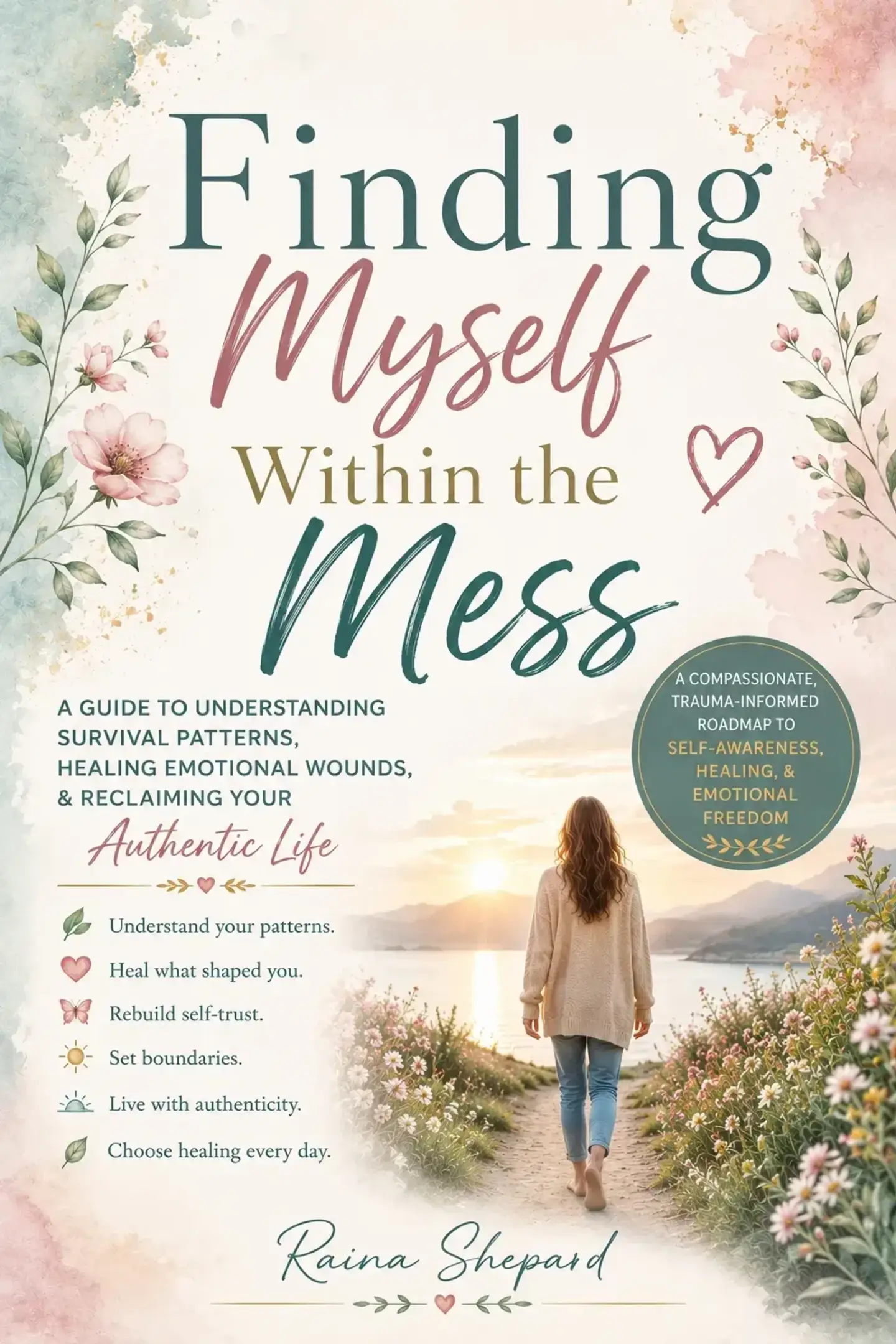
For a further sense of the emotional-healing work within Raina Shepard’s writing, you can explore the books and stories from Raina Shepard, including titles centered on survival, identity, spiritual growth, and personal transformation.
A Simple Ten-Minute Practice
You do not need an elaborate morning or evening routine. Begin here:
Minute one: Place both feet on the floor. Notice the room around you.
Minutes two through five: Write freely about what you feel in your body and what your mind is carrying.
Minutes six through nine: Read a short passage from a book that feels steady and meaningful.
Minute ten: Write one sentence beginning with, “Today, I can offer myself…”
The answer may be ordinary. A slower morning. One honest boundary. A glass of water. Permission to rest. A phone call. Less criticism.
Ordinary care still counts.
You may not feel transformed after one ritual, one journal entry, or one chapter. That is not failure. The nervous system often learns through accumulated evidence: this moment passed, I listened to myself, I returned, I was allowed to stop.
Healing lives in that middle ground. Not in pretending everything is fine, and not in remaining forever inside what hurts. In the small, faithful movement between alarm and ease, confusion and meaning, isolation and connection.
You return to the page. You return to the chair. You return to your own life: gently, imperfectly, and again.