July 1, 2026
Looking for Books for Kids About Grief? Here Are 10 Things You Should Know Before You Start Reading
You might think that picking up a book about loss is like reaching for a bandage: a quick, neat way to cover a wound that feels too raw to touch. There is a common belief that if…

You might think that picking up a book about loss is like reaching for a bandage: a quick, neat way to cover a wound that feels too raw to touch. There is a common belief that if we find the "perfect" story, the right words will stitch the sadness back together, making the sharp, frantic edges of a child’s grief go away. But healing is rarely that tidy. A book is not a cure; it is a companion. It doesn’t fix the aching void, but it sits quietly in the middle of it with you, offering a language for the feelings that are often too heavy for a child to carry alone.
When you open a book to help a child navigate grief, you aren't just reading words on a page. You are opening a door to a world where their "big feelings" are finally seen, named, and held with care. Whether you are a parent, a teacher, or a caregiver, entering this space requires a certain kind of presence: a soft, steady patience that allows for silence, questions, and the messy, unpredictable weather of a mourning heart.
Before you turn the first page, here are ten things you should know about using books as a bridge toward emotional healing.
1. The Story is the Starting Point, Not the Solution
It is tempting to look for a book that "explains" death so perfectly that your child will never have a question again. However, the most profound healing happens in the spaces between the sentences. A book like Ellie Is Learning The Meaning of Feelings isn't there to give a final answer; it’s there to help a child recognize the frantic pulse of anxiety or the heavy weight of sadness. Use the story to open the conversation, then let your child’s own words: or their silence: lead the way.
2. All "Wrong" Feelings are Right
Grief in children often looks nothing like the somber, quiet sadness we expect. It can be loud, angry, or even confusingly joyful. You might see a child playing happily one moment and having a sharp, jagged meltdown the next. When you read, look for stories that celebrate emotional complexity. Books that feature characters like Fairy Glitterwhisp show that even in magical worlds, feelings can be complicated, swirling, and deeply misunderstood. Validate the anger just as much as the tears.

3. Illustrations Can Speak When Words Fail
For a child, the "aching" feeling in their chest doesn't always have a name, but it might have a color. Sometimes, a child will connect more with the shade of a sunset or the way a character’s shoulders slump in a drawing than with the text itself. In the Ellie the Elephant series, the soft, watercolor textures provide a visual safety net. Pay attention to what your child lingers on. Are they staring at the shadows? Are they touching the light? Let the art be their guide.
4. Use Clear, Soft, and Honest Language
We often try to protect children with euphemisms: telling them someone is "sleeping" or has "gone away." But to a child’s literal mind, these phrases can create a frantic sense of waiting or a sharp fear of bedtime. It is better to use clear, direct language within the safety of a story. Books provide a structured way to say, "This is what happened," while still keeping the atmosphere gentle and filled with love.
5. You Don’t Have to Finish the Book
If you find that the emotional weight becomes too much, or if your child starts to wiggle and look away, it is okay to stop. Healing doesn't follow a schedule. Sometimes, a child only has the capacity for two pages of a story before they need to run, play, or hide. Forcing the end of a chapter can make the experience feel like a chore rather than a comfort. Follow their lead; the book will still be there tomorrow, waiting in the soft light of the bookcase.

6. The "Second Read" is Where the Magic Happens
The first time you read a book about grief, your child might be processing the plot. The second time, they might start to notice the character's sadness. By the fifth time, they might finally ask, "Is that how I feel too?" Repetition is a form of emotional safety. Re-reading a favorite story, like The Four Critters of Feelings, allows them to anticipate the difficult parts and find comfort in the resolution. It turns a scary unknown into a familiar journey.
7. Your Own Grief is Part of the Room
You cannot hold a child’s hand through the dark if you are pretending the dark doesn't exist. It is okay: even healthy: for your child to see your own eyes well up or to hear your voice crack while reading. It teaches them that mourning is a shared human season, not a secret to be kept in the dark. By being a gentle companion to yourself, you show them how to be a gentle companion to their own hurting hearts.
8. Create a Bridge from the Page to the Heart
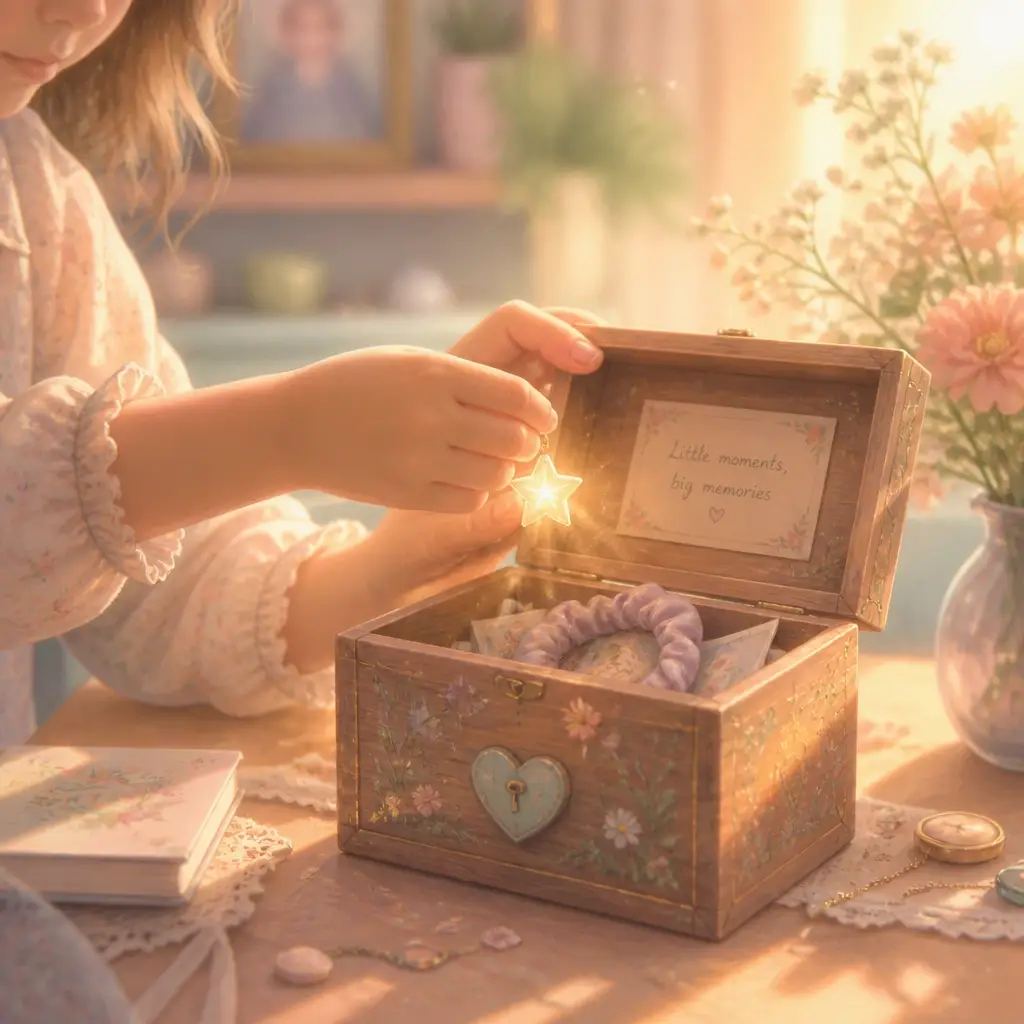
A story doesn't have to end when the cover is closed. You can take the themes of a book and turn them into small, tangible rituals. If a character in a book keeps a "memory box," perhaps you and your child can find a small wooden chest and fill it with shimmering stones, old photographs, or soft ribbons that remind them of what they have lost. These physical actions help ground the abstract "aching" of grief into something they can hold in their hands.
9. Focus on the "Middle Ground" of Healing
Many books focus on the very beginning of a loss or the "acceptance" at the end. But most of life happens in the middle: the long, quiet stretches of missing someone, the sudden stabs of memory, and the slow adjustment to a new "normal." Look for books that acknowledge this transition. Even stories about moving or family changes, such as Ellie’s Heart Between Home, can provide the emotional vocabulary for children who are learning how to live between two different worlds of feeling.
10. Books are a Tool, but Presence is the Power
At the end of the day, a child won't remember the specific sentence that "fixed" them. They will remember that you sat with them. They will remember the warmth of the room, the steady rhythm of your breathing, and the fact that you weren't afraid of their tears. Books are wonderful, but your presence: your willingness to stay in the uncomfortable, quiet places with them: is the true source of their transformation.

Grief is not a problem to be solved, but a season to be lived through. As you pick up a book to read to the child in your life, remember that you are not looking for a map to the exit. You are looking for a way to walk through the woods together, holding a small light, waiting for the dawn. It may take a long time, and the path may be winding, but with the right stories and a compassionate heart, you will eventually find your way home.