September 20, 2026
How to Help a Child Who Feels "Too Much" — Without Teaching Them to Shrink
“Your child is too sensitive” is not an explanation. It is often a label placed over a child’s sharp disappointment, frantic worry, aching empathy, or sudden tears because the…

“Your child is too sensitive” is not an explanation. It is often a label placed over a child’s sharp disappointment, frantic worry, aching empathy, or sudden tears because the adults around them do not know what else to call it.
But your child is not too much.
They may be feeling more intensely than they can yet understand. They may notice a change in someone’s voice, a crowded room, a friend’s disappointment, or the sadness beneath a goodbye. Their inner world may be bright, fast-moving, and full of feelings that arrive before words do.
That does not mean you need to correct their sensitivity out of them. It means they need help carrying it.
They need co-regulation, not shame. Presence, not pressure. A safe relationship where they can learn, slowly and over many seasons, that their feelings are welcome, even when their behavior still needs guidance.
A child who feels deeply is not a problem to solve
When a child cries over a small change, becomes overwhelmed by noise, or takes a friendship conflict very seriously, it can be tempting to say:
- “You’re overreacting.”
- “It’s not a big deal.”
- “Stop being so sensitive.”
- “You need to calm down.”
These phrases may seem practical in the moment. However, a child rarely hears only the words. They may also hear: My feelings are inconvenient. My reactions make me difficult. I need to become smaller to stay connected.
That is the lesson you want to avoid.
A highly sensitive child still needs boundaries. They still need to learn that hitting, yelling hurtful words, or breaking things is not okay. But correction works best after connection has returned. When a child is flooded with emotion, they are not in the best place to absorb a lecture, explain their choices, or practice a new skill.
First, help them feel safe.
Then, help them learn.
This is the heart of co-regulation: an adult offers a warm, steady presence while a child’s body and emotions begin to settle. Over time, those shared experiences help a child develop self-regulation. The ability to recognize and manage feelings with increasing independence.
What co-regulation looks like in the middle of a big feeling
Your child may be crying hard, hiding under a table, shouting that something is unfair, or going completely quiet. The loud emotion is easy to see.
The quieter emotions may be harder to notice: embarrassment, fear, helplessness, sensory overload, or the exhaustion that comes after trying to hold everything together.
Before you respond, pause for one breath. Feel your feet on the floor. Lower your voice. You do not have to become perfectly calm; you only need to become calm enough to offer a little steadiness.
Then try:
- “I can see this feels really big right now.”
- “You’re safe. I’m staying with you.”
- “That was a lot of noise and change all at once.”
- “You don’t have to explain everything yet.”
- “We can figure this out together.”
Keep your sentences short. A distressed child may not be able to process a long explanation, even if the explanation is reasonable. Your tone, posture, and pace may communicate more than your words.
Get down to their level if that feels safe. Move closer, but do not force eye contact or touch. Some children want a hug. Others need space with a trusted adult nearby. You can offer both:
“Would you like my hand, a hug, or a little space while I sit here?”
You are not rewarding a meltdown by offering comfort. You are helping an overwhelmed child return to a state where learning is possible.
Help your child name what is happening
Children who feel “too much” are not always able to identify the feeling underneath the behavior. They may say “I hate everything” when they are disappointed, frightened, tired, and ashamed all at once.
You can gently lend them language without insisting that they use it immediately.
Try noticing what you see:
- “Your hands are tight, and your voice is loud. Your body may be feeling overwhelmed.”
- “You wanted the plan to stay the same, and the change felt upsetting.”
- “You seem angry, but I wonder if there is also some hurt underneath.”
- “Sometimes we can feel excited and nervous at the same time.”
This is not about guessing perfectly. It is about showing your child that emotions can be explored without judgment.
A child who hears their inner experience described with compassion begins to develop emotional literacy. They learn that feelings have names, patterns, and movement. Anger rises and falls. Grief can sit beside love. Worry can exist alongside courage.
Nothing has to be forced into one neat category.
Offer regulation through the body
When your child is overwhelmed, begin with the body rather than a complicated conversation. You can try:
- dimming bright lights or moving to a quieter room
- offering water, a crunchy snack, or a soft blanket
- breathing slowly without demanding that your child copy you
- walking, rocking, stretching, dancing, or gently shaking out tension
- sitting side by side while listening to quiet music
- squeezing a pillow or stuffed animal
- looking together for five blue objects in the room
Some children need stillness. Others need movement. Some need a familiar ritual, while others need fewer words and more space.
You are learning your child’s particular language of overwhelm.
The goal is not to make the feeling disappear instantly. The goal is to help your child move from “I cannot manage this” toward “I am not alone while this is happening.”
As ZERO TO THREE explains, children learn regulation through responsive connection before they can consistently regulate on their own. Your calm does not need to be flawless. It simply becomes a place your child can borrow for a while.
Read stories that make room for complex emotions
Stories can reach children in a way that direct instruction sometimes cannot. A child may resist talking about their jealousy, sadness, worry, or shame, but they may be willing to talk about a character who feels those things.
That is one reason emotionally rich books can be such gentle companions.
When you read, pause occasionally and ask:
- “What do you think this character is feeling?”
- “Do you think they are feeling more than one thing?”
- “What might help them feel safe?”
- “Have you ever felt something like that?”
- “What would you want someone to say to you?”
Do not turn every story into a lesson. Let the child enjoy the pictures, the rhythm, the humor, and the quiet closeness of reading together. Emotional learning often happens at the edges of the conversation, in the moments when a child points to a face or leans against you.
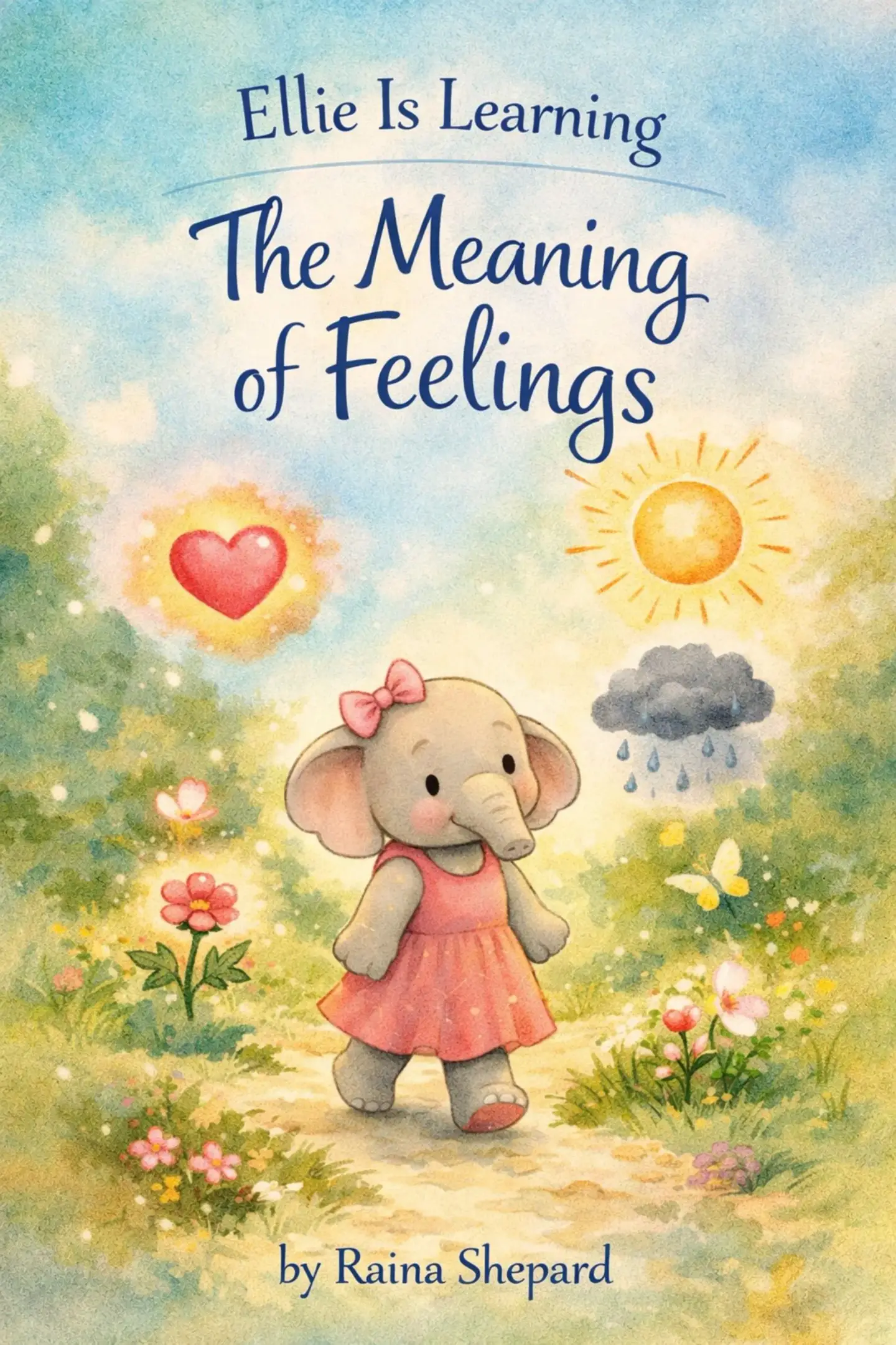
The Ellie the Elephant series offers this kind of gentle space for children who are learning to understand themselves. In Ellie Is Learning the Meaning of Feelings, Ellie encounters emotions as real, changing experiences rather than problems that make her bad. In Ellie Is Learning Her Growing Self, the focus turns toward identity, development, and the tender realization that growing into yourself takes time.
These are books for self-worth kids because they do not ask children to become less tender, less thoughtful, or less emotionally alive. They invite children to understand those qualities with compassion.

Validate the feeling while holding the boundary
Validation does not mean agreeing with every conclusion or allowing every behavior.
You can say:
“It makes sense that you’re angry. I won’t let you hit me.”
Or:
“You really wanted to stay longer. It is okay to be disappointed. It is time to leave.”
Or:
“That friendship problem hurt. You may not call someone names, but you can tell me what happened.”
This is the middle ground: the feeling is accepted, and the limit remains.
Your child does not need to be shamed into good behavior. They need repeated experiences of being held accountable without being treated as unlovable. That distinction can become part of their inner voice someday.
I can make a mistake and repair it. I can feel angry and choose a safer action. I can need help without being weak.
Those lessons take repetition. They also take time.
Talk after the storm, not during it
When the crying has softened, the shoulders have lowered, or your child has returned to play, you can revisit what happened. Keep the conversation curious rather than prosecutorial.
Ask:
- “What did you notice in your body?”
- “What part felt hardest?”
- “What helped even a little?”
- “What could we try next time?”
- “Do you want to make a plan together?”
You might create a small “big feelings plan” with pictures or simple words: quiet corner, water, hug, movement, book, breathing, trusted adult.
Do not expect the plan to work every time. A tool is not a test your child passes or fails. It is an option waiting nearby for the next difficult moment.
And if you lose your patience, and most caregivers do sometimes, repair matters more than perfection. You can say:
“I raised my voice, and that may have felt scary. I was overwhelmed, but it was my job to take care of my feelings. I’m sorry. Let’s try again.”
This teaches something powerful: relationships can have ruptures without ending. Safety can be rebuilt.

You do not have to make your child less sensitive
There may be days when your child’s feelings are exhausting. You may feel the sharp edge of your own frustration, the frantic pressure of a public meltdown, or the quiet ache of wondering whether you are doing enough.
You are allowed to need support, too.
If your child’s distress is persistent, interferes significantly with daily life, or raises concerns about safety, speak with a pediatrician, school counselor, or qualified mental health professional. Getting help does not mean your child is broken. It means you are taking their experience seriously.
But sensitivity itself is not a flaw to remove.
Your child may notice what others miss. They may care deeply, imagine vividly, love fiercely, and bring unusual tenderness into a room. Those gifts still need boundaries, language, rest, and guidance. They also need protection from the belief that being accepted requires becoming smaller.
So when your child feels “too much,” come close if you can.
Lower the lights. Soften your voice. Stay present through the storm.
You are not teaching them that every reaction is acceptable. You are teaching them that no feeling makes them unworthy of love, and that, with time, support, and practice, they can grow without leaving their whole-hearted self behind.