September 20, 2026
Fairy Glitterwhisp in the Land of Feelingwood: How Magical Stories Teach Kids Empathy
You do not teach a child empathy by telling them to “be nicer.” That familiar advice sounds simple, but feelings are rarely simple. A child may understand that kindness matters…
You do not teach a child empathy by telling them to “be nicer.”
That familiar advice sounds simple, but feelings are rarely simple. A child may understand that kindness matters and still grab a toy, interrupt a friend, slam a door, or say something sharp when disappointment rises too quickly. The lesson is not always missing. Sometimes the feeling is simply louder than the child’s ability to understand it.
That is where stories can help.
A magical story gives children room to look closely at fear, jealousy, loneliness, frustration, and belonging without feeling examined themselves. Through a character who is lost, worried, embarrassed, or left out, your child can explore difficult emotions from a safe and gentle distance.
That is the heart of Fairy Glitterwhisp in the Land of Feelingwood, the new release from Raina Shepard.
Welcome to Feelingwood, where emotions come alive
Beyond the edge of the ordinary world lies Feelingwood, a magical forest where every emotion has a purpose.
In this bright, enchanted place, glowing flowers bring feelings to life. Emotions are not invisible storms children must somehow manage alone. They become something they can notice, name, and talk about.
That matters.
When feelings are sharp or frantic, children often experience them as facts: Everyone is against me. Nobody understands. I have to make this stop right now. A story can soften that certainty. It creates a little space between the child and the emotion, allowing them to wonder:
- What is this character feeling?
- What caused the feeling to grow?
- What might help them feel less alone?
- What could a friend do next?
Fairy Glitterwhisp travels through Feelingwood as strange changes begin affecting the forest. Friends stop listening. Tempers flare. Worries spread. Misunderstandings gather like mist between the trees.
But the woodland creatures have not lost their kindness. They are struggling to understand what is happening inside them.
That distinction is important for children, and for the adults who love them. A difficult behavior is not always proof of a difficult heart. Sometimes it is a sign of fear, sadness, confusion, or an unmet need that has not yet found words.
Why fantasy creates a safe distance for big feelings
When a child is already overwhelmed, asking, “Why did you do that?” can feel like a spotlight.
Fantasy changes the lighting.
A glowing flower, a worried woodland animal, or a gentle fairy can hold the emotional weight for a while. Your child does not have to announce, “I feel left out.” They can say, “That creature feels lonely.” They do not have to confess that jealousy is aching in their chest. They can notice it in a character first.
This distance is not avoidance. It is an opening.
Research on narrative fiction suggests that stories can support empathy by helping children identify with characters, imagine different perspectives, and consider thoughts and feelings beyond their own. The Greater Good in Education guide to fostering empathy through literature also emphasizes the value of discussing characters’ emotions and choices with children.
Fantasy adds another layer. It allows difficult subjects to become approachable, playful, and emotionally safe while still remaining meaningful.
A forest can represent a confusing classroom. A glowing flower can represent a feeling that has suddenly become impossible to hide. A fairy’s journey can mirror the quiet work of learning to pause, listen, repair, and try again.
The magic makes the conversation easier to enter, but the feelings remain real.
How Fairy Glitterwhisp helps children practice empathy
Empathy is not one single skill. It includes noticing another person’s emotions, imagining their perspective, caring about their experience, and choosing a compassionate response.
Children practice all of these movements as they follow Glitterwhisp through Feelingwood.
1. Naming emotions without shame
Children cannot always explain the difference between sadness and disappointment, or between anger and embarrassment. Their bodies may know before their words do.
A story gives those feelings shape.
As the woodland characters encounter fear, sadness, jealousy, frustration, disappointment, embarrassment, loneliness, and uncertainty, children receive language for the quiet and obvious emotions moving through their own lives.
That vocabulary can become a bridge:
“Maybe you are not being bad. Maybe you are frustrated.”
“I wonder if your friend felt embarrassed.”
“That looked like anger, but maybe there was hurt underneath it.”
Naming a feeling does not make it disappear. It makes it less mysterious, however.
2. Looking beneath behavior
A child who refuses to share may be protecting something. A child who becomes bossy may be frightened of losing control. A child who pushes someone away may be longing to belong but not know how to ask.
Feelingwood invites children to look beneath the first reaction.
Instead of asking only, “Was that behavior right or wrong?” you can also ask, “What might have been happening inside that character?”
That question gently develops perspective-taking. It helps children understand that people can make unkind choices while still having understandable feelings, and that understanding is not the same as excusing.
There is room for accountability, repair, and compassion.
3. Seeing belonging as something we create
Friendship and belonging are central to the world of Fairy Glitterwhisp. The creatures in Feelingwood do not always listen well. They misunderstand one another. They experience conflict, distance, and hurt.
Then they have opportunities to reconnect.
This is a valuable message for children who believe one mistake means a friendship is over. Belonging is not the reward for being perfect. It grows through honesty, patience, inclusion, and the willingness to try again.
Your child may begin to notice the child sitting alone at school. They may recognize a sibling’s silence at home. They may understand that a friend who looks cross could actually be carrying something heavy.
Empathy often begins quietly.
It may look like making room, asking a question, waiting for an answer, or offering a small kindness without being asked.
Turn story time into an empathy ritual
You do not need a complicated lesson plan. You do not need to stop after every page and turn reading into an assessment.
Stay close to the story.
After a chapter or meaningful scene, try one gentle question:
- “What do you think this character is feeling?”
- “What clues helped you notice that?”
- “Have you ever felt something similar?”
- “What could a friend do to help?”
- “What might the character need, not just want?”
- “How could the problem be repaired?”
Keep the questions open. There may be more than one answer.
A child might say a character is angry. You might notice sadness. Both observations can be true. Emotions often overlap: frantic on the surface, aching underneath; loud in the voice, quiet in the heart.
You can also invite your child to draw a Feelingwood flower for a feeling they experienced that day. What color would it be? Would it glow softly or brightly? Would it need sunlight, rain, space, or companionship?
These small activities help children move from emotional reaction toward emotional awareness.
A meaningful choice for home, classroom, or counseling
Parents, grandparents, educators, counselors, and caregivers can use emotionally rich stories in many settings.
At bedtime, Fairy Glitterwhisp can open a calm conversation after a difficult day. In a classroom, Feelingwood can support discussions about friendship, inclusion, conflict, and emotional language. During homeschooling or counseling, the characters can provide a shared world where children explore challenges without having to begin with their own most vulnerable experiences.
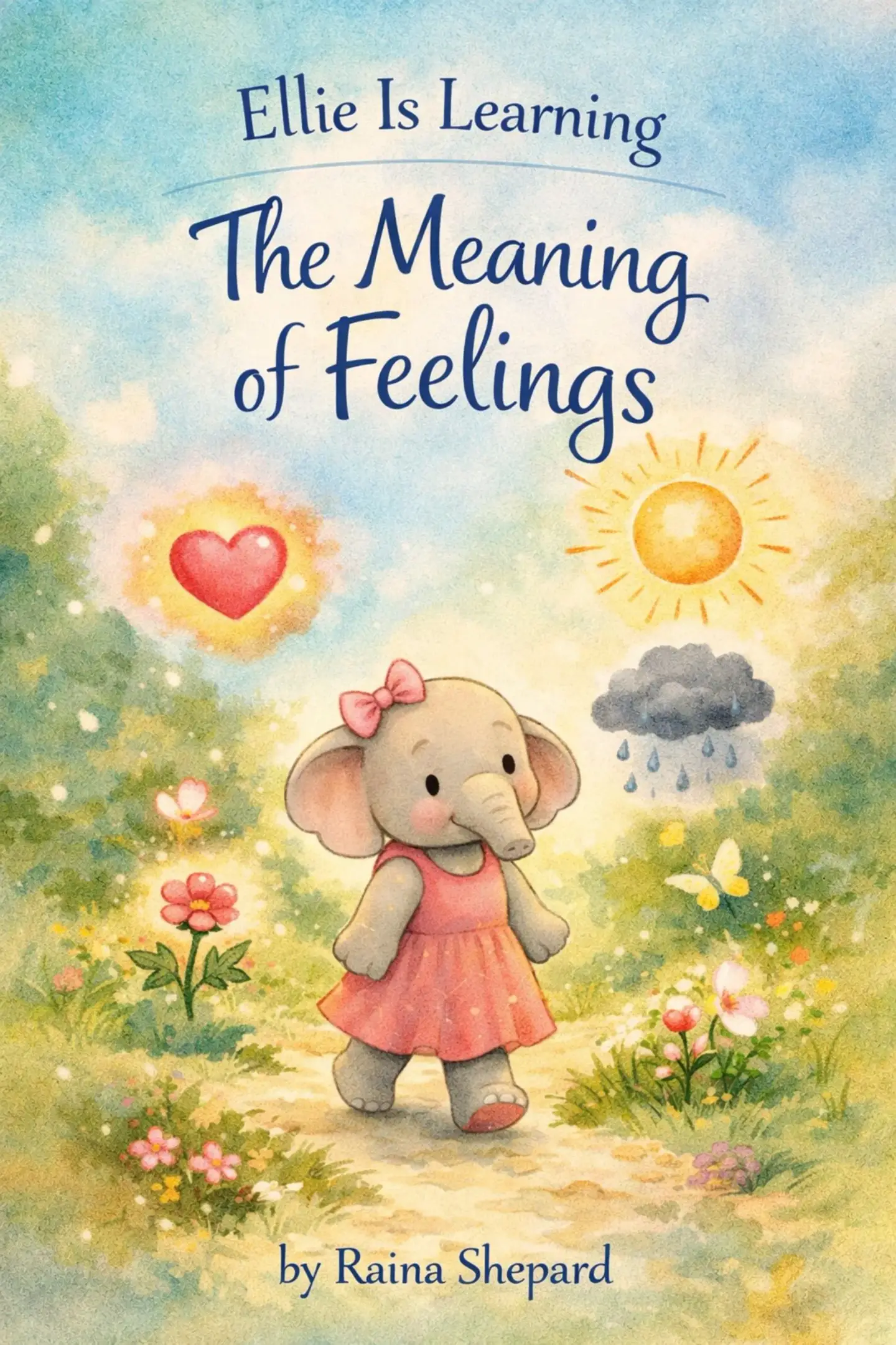
It also pairs naturally with other children’s books by Raina Shepard, including Ellie Is Learning the Meaning of Feelings, which helps children connect emotions with everyday experiences.
These are not books that demand instant emotional mastery. They are companions.
They remind children that feelings are part of being human, that mistakes can be repaired, and that kindness is often learned through practice rather than delivered perfectly the first time.
The lasting lesson of Feelingwood
You may hope a story will make your child more patient, more considerate, or more able to manage strong emotions. Sometimes it will.
Sometimes the change is harder to see.
It may appear weeks later when your child pauses before interrupting. It may surface when they say, “I think she feels lonely.” It may be hidden in an offered toy, a softened voice, or a hesitant apology.
That is how empathy grows: slowly, relationally, through repeated encounters with feelings that once seemed too large to hold.
Fairy Glitterwhisp in the Land of Feelingwood offers children a luminous place to begin. In its glowing flowers, woodland friendships, and gentle emotional journeys, children can discover that no feeling makes them unworthy of love, and no one else’s feeling is too strange to deserve care.
You turn the page together.
The forest opens.
And somewhere in the soft light of Feelingwood, your child may begin to see another heart more clearly, however quietly.