August 26, 2026
Emotional Healing Books vs. Therapy: What Each One Can (and Can't) Do for You
Healing does not mean reading the right book, thinking positive thoughts, and becoming a new person by Monday. Sometimes a book helps. Sometimes therapy is essential. Often,…

Healing does not mean reading the right book, thinking positive thoughts, and becoming a new person by Monday.
Sometimes a book helps. Sometimes therapy is essential. Often, healing asks you to use both: but in different ways, across different seasons.
When you are carrying something sharp and aching inside, it can be difficult to know where to begin. You may search for emotional healing books, save articles about trauma recovery, or wonder whether a therapist could truly understand the frantic, watchful world you have been living in.
You are not failing because you need support. You are not weak because a book cannot hold everything. Each kind of help has a place, but each has limits, too.
Books and therapy open different doors
A book can meet you quietly.
It can wait beside your bed, travel in your bag, and offer language for feelings you have only known as tension, numbness, anger, or exhaustion. You can underline a sentence, close the cover, and return when you have more room inside yourself.
Therapy is different. It is a living relationship with another person who can listen closely, notice patterns, ask careful questions, and adjust the work according to what is happening for you in the moment.
One is not automatically better than the other. They simply offer different kinds of presence.
Structured self-help reading, sometimes called bibliotherapy, may help with mild-to-moderate anxiety or depression, particularly when it is based on established approaches such as cognitive behavioral therapy. Research suggests that guided reading tends to be more helpful than reading completely alone, especially when a professional helps you understand and apply the material (PubMed review).
But emotional growth books and trauma-related books are not all designed as clinical treatments. Some are companions. Some are educational. Some are stories that help you recognize yourself without asking you to explain everything.
That distinction matters.
What emotional healing books can do for you
1. They can give shape to what feels confusing
Pain becomes even lonelier when you cannot name it.
A thoughtful book may help you recognize survival patterns, people-pleasing, emotional avoidance, shame, grief, or the quiet loss of identity that can happen when you spend years adapting to everyone else.
This naming does not solve everything. However, it can soften the frightening sense that you are uniquely broken.
A book can say, in its own way: This experience has a shape. You are not the only person who has felt it.
2. They can offer language for self-reflection
Healing often begins in small moments of recognition.
You notice that your “independence” may sometimes be isolation. You see that constant explaining, vigilance, and adjustment may be connected to an old need to stay safe. You begin to ask not only, “What is wrong with me?” but also, “What happened to me, and what did I learn to do to survive?”
The right book cannot answer every question. It can help you ask kinder ones.
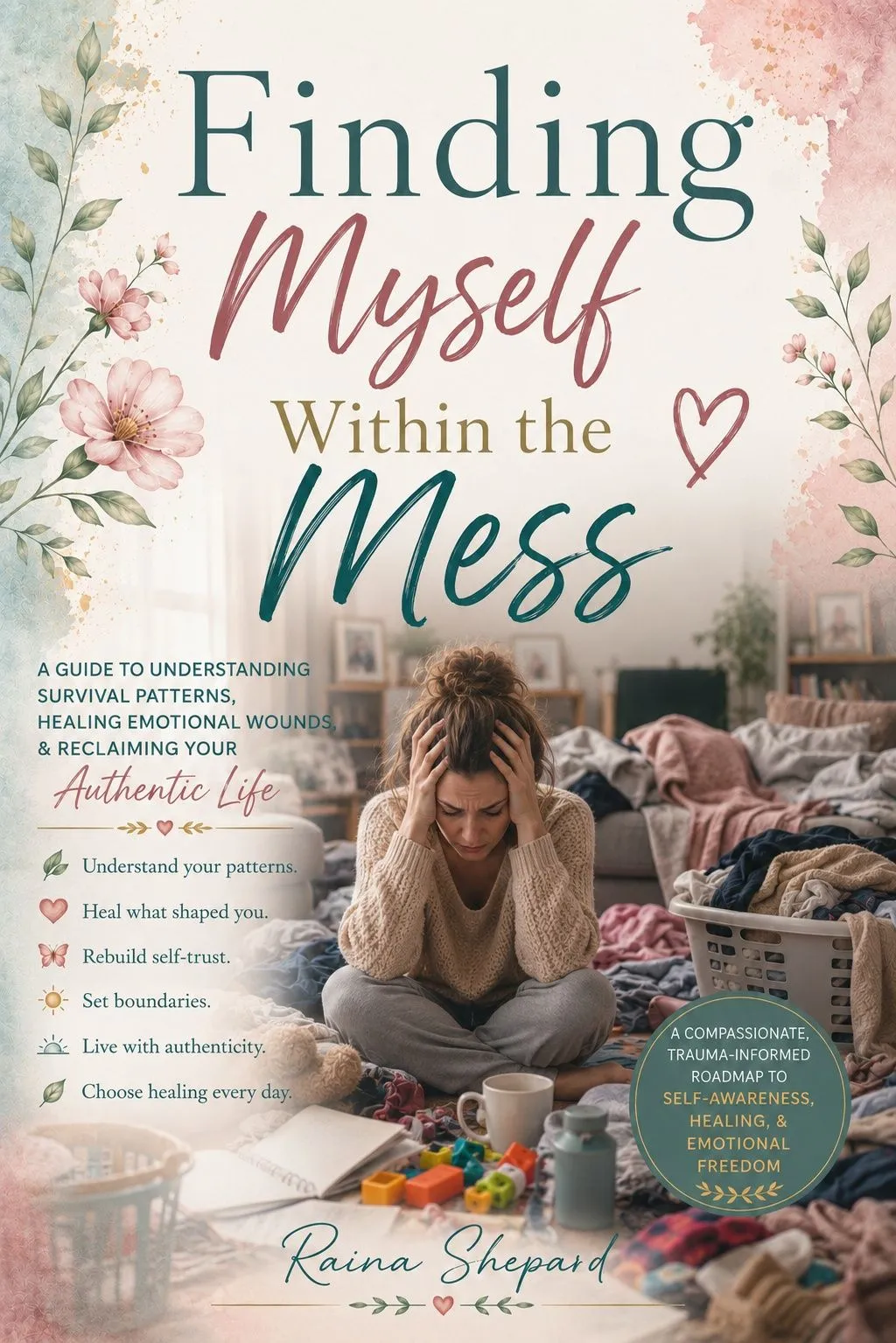
Books such as Finding Myself Within the Mess are written as compassionate roadmaps for understanding survival patterns, healing emotional wounds, and rebuilding self-trust. You may read a chapter and feel a little less alone in the middle ground between recognizing your patterns and knowing how to change them.
3. They can give you a private place to move slowly
Therapy happens at a scheduled time. Books can meet you when the room is quiet and the world has stopped demanding things from you.
That privacy can be comforting. You can read one page, skip a chapter, journal in the margins, or let a sentence stay with you for several days.
For some people, this is the first form of emotional safety they have experienced in a long time.
Still, privacy can become isolation if you are struggling with severe symptoms or feeling unsafe. A book may be gentle company, but it cannot notice when you are dissociating, assess risk, or reach for help on your behalf.
4. They can support therapy between sessions
A book can help you remember what you discussed in therapy. It can give you vocabulary for a difficult conversation, a grounding practice to try, or a way to organize the thoughts that arrive after a session.
You might bring a passage to your therapist and say, “This is close to what I feel, but not quite.” That sentence alone can open an important door.
Books do not have to compete with therapy. They can become part of the conversation.
What books cannot reliably do
A book cannot tailor its pace to your nervous system.
It cannot see when a chapter has moved from challenging to destabilizing. It cannot help you distinguish between productive discomfort and the overwhelming flood of a flashback, panic response, or dissociation.
It also cannot provide the therapeutic relationship that many trauma survivors need. Healing from trauma may involve trust, boundaries, attachment, accountability, and the experience of being met by another person without having to perform, minimize, or disappear.
A book can describe those experiences beautifully. It cannot participate in them.
This is especially important if you are dealing with frequent flashbacks, severe nightmares, self-harm urges, suicidal thoughts, major disruption to daily life, substance misuse, or intense dissociation. In those circumstances, healing from trauma books should be used as a supplement: not as your only source of care.
If you feel in immediate danger or believe you may harm yourself, call emergency services. In the United States, you can call or text 988 for the Suicide & Crisis Lifeline. If you are elsewhere, contact your local crisis service or emergency number.
What therapy can offer that a book cannot
Therapy gives you a responsive relationship.
A trained professional can help you explore your history while paying attention to your present safety. They can slow down, change direction, teach regulation skills, and help you understand why certain memories, relationships, or situations create such a powerful reaction.
Depending on your needs, a trauma-informed therapist may offer approaches such as Cognitive Processing Therapy, Prolonged Exposure, or EMDR. The U.S. Department of Veterans Affairs identifies trauma-focused therapies as among the most effective treatments for PTSD and provides an overview of these approaches here.
Therapy may also help you work with the parts of healing that are difficult to do alone:
- noticing patterns as they happen in real time
- practicing boundaries in relationships
- processing grief, fear, guilt, and anger
- learning to remain present when your body expects danger
- receiving support when insight is not enough
Therapy is not a magic room where someone fixes you. It can be uncomfortable, slow, and imperfect. But it offers something a book cannot: another human being who can stay present with you as the meaning changes.
Books vs. therapy: a gentle comparison
| Need | Emotional healing books | Professional therapy |
|---|---|---|
| Understanding patterns | Offers explanations, examples, and reflection prompts | Connects patterns to your personal history and present life |
| Emotional language | Helps you name feelings and experiences | Helps you explore and express them safely with another person |
| Practical tools | Can suggest grounding, journaling, boundaries, or coping practices | Can teach, personalize, and monitor how those tools affect you |
| Trauma processing | May prepare you for therapy or reduce shame | Can provide structured, trauma-focused treatment |
| Personalization | Fixed content that you interpret for yourself | Adjusted to your needs, pace, culture, and responses |
| Safety | Cannot assess risk or respond to crisis | Can monitor distress and connect you with additional care |
| Accessibility | Usually affordable and available immediately | May involve cost, scheduling, and a waiting list |
| Companionship | Offers a steady, private presence | Offers a reciprocal therapeutic relationship |
Neither column is a verdict.
It is a map.
How Raina Shepard’s books can fit into your healing season
Some books teach. Some books reflect. Some stories help you feel the truth of an experience before you are ready to explain it.
Raina Shepard’s adult collection makes room for all three.
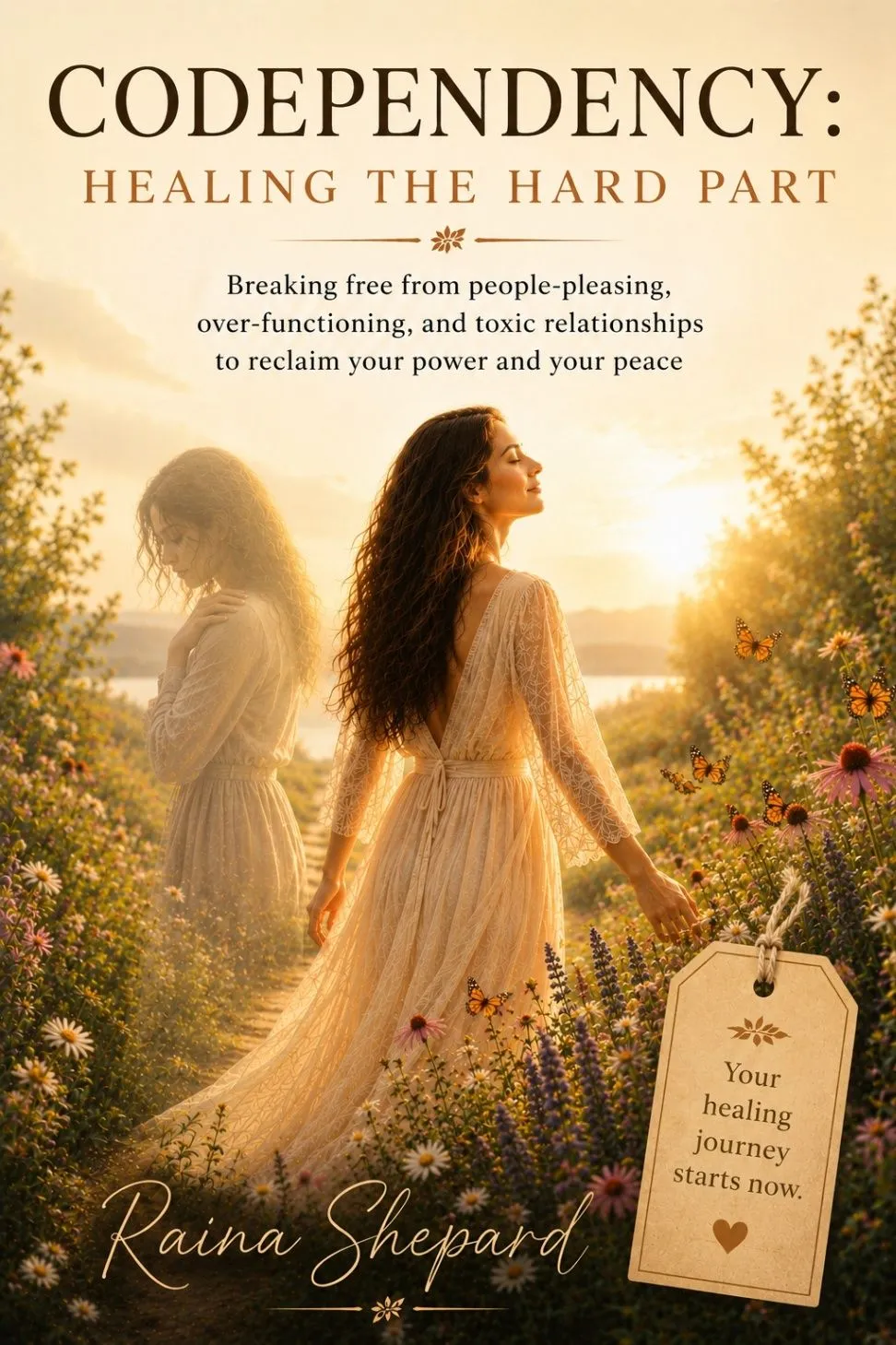
Codependency: Healing the Hard Part speaks to the exhausting work of moving beyond people-pleasing and reclaiming peace. Finding Myself Within the Mess explores survival patterns, healing, and the long return to self-trust.
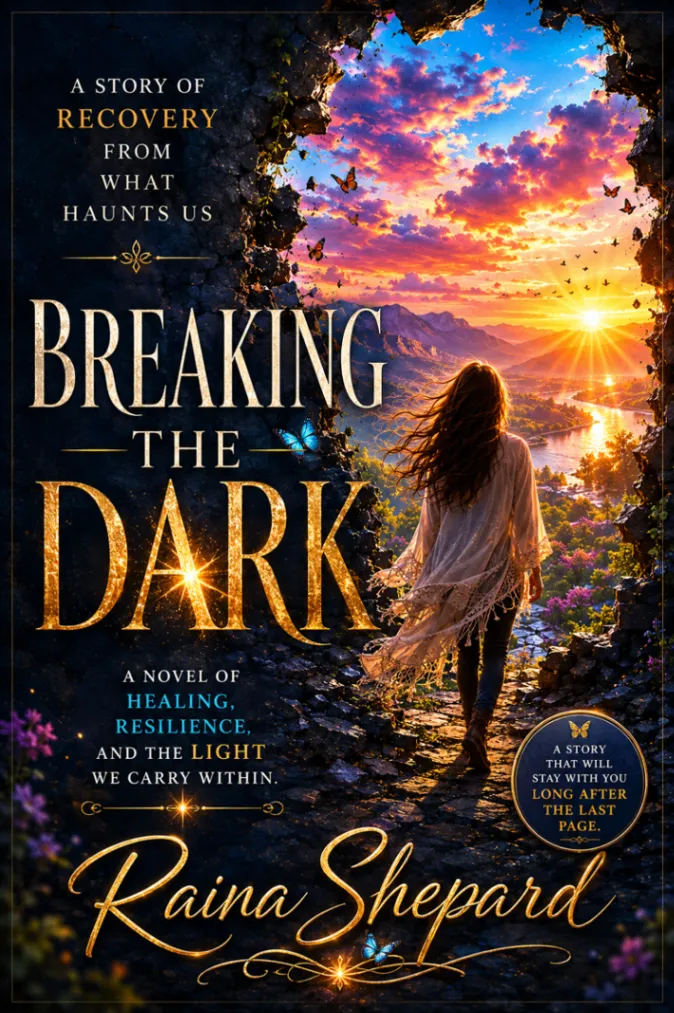
For readers who process through fiction, Breaking the Dark offers a novel of recovery and resilience, while Love Without Swords centers the reclamation of identity after losing yourself inside love.
These books are not substitutes for therapy. They are emotionally resonant companions for the spaces therapy may not reach: the early morning reflection, the long drive home, the quiet question that rises after you have closed your laptop.
You may find that a story gives you permission to feel before a self-help framework gives you a way to understand.
Both can matter.
How to use books and therapy together
You do not have to choose a single path forever.
You might begin with a gentle book while looking for a therapist. You might read alongside ongoing treatment. You might pause a trauma-focused chapter and return to grounding, rest, or ordinary life.
A few quiet guidelines can help:
Choose a book that matches your current capacity.
If you are overwhelmed, begin with safety, self-compassion, and grounding rather than detailed trauma narratives.Notice your body while reading.
Tight shoulders, a racing heart, numbness, and frantic thoughts are information. They are not signs that you should force yourself onward.Bring meaningful passages into therapy.
A paragraph can sometimes communicate what feels impossible to say directly.Let fiction be fiction.
An emotionally deep novel may help you feel seen, but it does not need to provide exercises or treatment to be valuable.Ask for help when the weight becomes too heavy.
Needing a therapist does not mean the book failed. It means your healing deserves more than one kind of support.
You are allowed to read for insight. You are allowed to read for comfort. You are allowed to stop.
Healing is not a test of endurance, and it is not a race toward becoming untouched by the past. It is the gradual, sometimes uneven process of learning what helps you feel more present, more truthful, and more like yourself.
A book can walk beside you.
Therapy can meet you in the room.
And sometimes, with patience, support, and honest presence, you begin to discover that you were never as lost from yourself as you feared: only waiting for a safe enough way back.
Explore Raina Shepard’s books or start a conversation about finding a story for the season you are in.