July 2, 2026
Can Spiritual Growth Books Really Help You Heal from Trauma? Find Out Here
You have likely heard the well intentioned whispers from those who haven't walked your path. "Just let it go," they say, or "Forgiveness is the only way to find peace." Perhaps…

You have likely heard the well-intentioned whispers from those who haven't walked your path. "Just let it go," they say, or "Forgiveness is the only way to find peace." Perhaps you’ve been told that if you just prayed harder, meditated longer, or thought more positively, the weight in your chest would finally lift. These clichés are often served as quick fixes, but trauma isn't a broken faucet you can simply turn off. It is a fundamental shift in how you experience the world, a fracture in your sense of safety that cannot be mended with a Hallmark sentiment.
The truth is that healing is rarely a straight line or a sudden epiphany. It is a slow, rhythmic process of coming back to yourself: a season of vigilance, explanation, and constant adjustment. While therapy and clinical support are vital foundations, there is often a quiet, aching space left behind: a spiritual hunger for meaning that psychology alone doesn't always touch. This is where spiritual growth books can step in, acting not as an authoritative commander, but as a gentle companion on your page.
The Aching Texture of Trauma
When you carry trauma, your internal world often feels sharp, frantic, and unpredictable. It is the sudden, aching throb of a memory triggered by a scent; the sharp, cold spike of anxiety in a crowded room; the frantic need to explain yourself even when no one is asking. Trauma lives in the body, but it echoes in the soul. It tells you that you are fundamentally different, perhaps even broken, and that the world is a place where "safe" is just a word other people use.
You might find yourself stuck in a cycle of constant adjustment, trying to navigate the jagged edges of your own reactions. The loudness of the panic often drowns out the quiet, subtle parts of your identity that still remember how to hope. In these moments, the "middle ground" of healing feels like a vast, lonely desert where the beginning is too far behind and the end is nowhere in sight.

The Bridge: Why Soul-Level Insight Matters
Can a book really help with something as heavy as trauma? If the book is written with both psychological groundedness and spiritual compassion, the answer is a resounding yes. Psychology provides the "how": the understanding of how your nervous system reacts, how your brain stores memories, and how your attachment styles were formed. But spiritual insight provides the "why": the framework for meaning-making that allows you to integrate your pain into a larger story of resilience.
When you read a trauma-informed spiritual growth book, you aren't just looking for instructions; you are looking for a mirror. You are looking for someone to say, "I see the weight you are carrying, and it makes sense." This validation is the first step toward breaking the isolation that trauma creates. By blending the wisdom of the soul with the science of the mind, these books help you move from a state of survival into a state of becoming.
The Book as a Gentle Companion
One of the greatest gifts a book offers is pace. In a world that demands you "get over it" or "move on," a book waits for you. You can read a page that hits too close to home and close the cover. You can let the words sit in the quiet of your room for a week before returning. You can underline the sentences that feel like a cool cloth on a fevered brow.
Books provide a safe, contained space to explore your internal state without the pressure of an immediate response. They offer rhythmic pacing: alternating between the hard truths of survival and the flowing, lyrical promises of transformation. They become a sanctuary you can carry with you, a low and steady voice of compassion that speaks to you in your moments of quiet crisis.

Raina Shepard’s Healing Roadmaps
In the Spiritual and Self-Help series by Raina Shepard, the goal isn't to give you a checklist for happiness. Instead, these books are designed to help you navigate the complex emotions of the "wounded and the searching." Each title serves as a different lantern for the path.
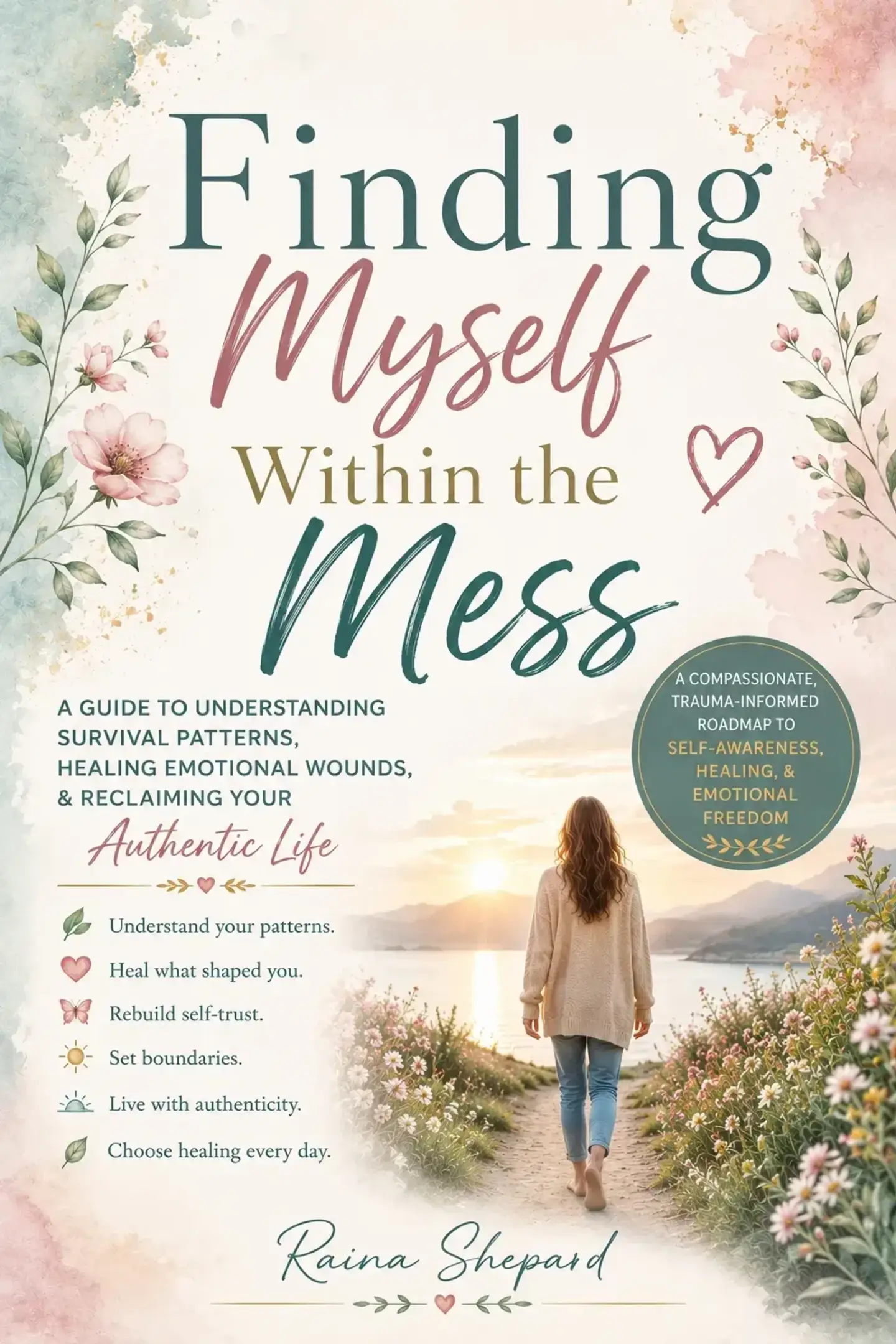
- Finding Myself Within the Mess: This book focuses on the identity assessment that reveals who you are versus who you had to become to survive. It dismantles the lie that your survival patterns are your personality, helping you untangle your true self from the wreckage of past trauma.
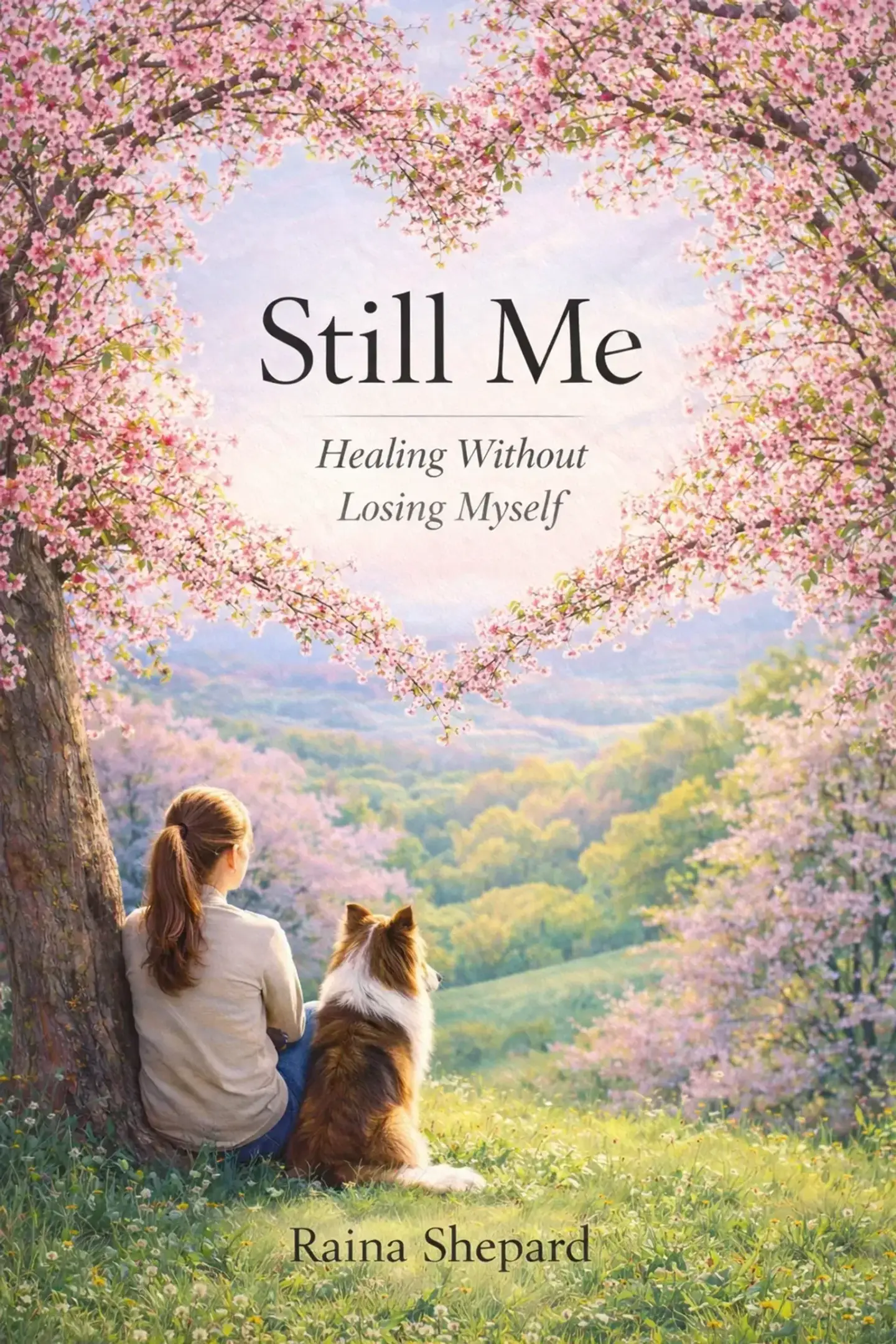
- Still Me: Healing Without Losing Myself: This narrative explores the "middle day" of healing: the space where you are no longer where you were, but not yet where you want to be. It is a somber but hopeful look at maintaining your essence while the world around you changes.
- The Life of a Mystic: For those who feel life more deeply: the sensitive souls who sense things they cannot explain: this book offers a spiritual home. it validates the heightened sensitivity that often comes with trauma and transforms it into a spiritual gift of "seeing beyond."
Navigating the "Middle Ground"
The most difficult part of healing is the transition. It is the space between the "grit" and the "grace," as described in The Hard Road Home. In this middle ground, you might feel like you are failing because the pain hasn't completely vanished. However, the presence of pain does not mean you aren't healing; it often means you are finally safe enough to feel it.
Spiritual growth books help you understand that these "seasons" of the soul are necessary. They teach you to honor the part of yourself that stayed hyper-vigilant to keep you alive, while gently inviting that part to rest. They provide the vocabulary for the quiet, subtle transitions: the first time you breathe deeply without a catch in your chest, or the afternoon you realize you haven't checked the exits for an hour.
A Lingering Reflection
Healing from trauma through the lens of spirituality isn't about escaping your humanity; it is about embracing it more fully. It is about realizing that your soul was never the thing that was broken: only your heart was. Spiritual growth books offer a way to bridge that gap, providing the "soulful storytelling" that Raina Shepard is known for.
You don't need a quick fix. You need a presence. You need to know that your journey is seen, your pain is valid, and your future is still your own to write. A book may not have all the answers, but it can hold your hand while you look for them. The path is long, and the light may sometimes feel dim, but as you turn the pages of your own recovery, you might just find that the most profound transformation happens in the quietest moments of reflection.
Healing is a homecoming. It is a slow walk back to the person you were born to be, before the world told you who you had to be. It is a difficult, beautiful, and necessary journey: but you don't have to walk it alone.