June 26, 2026
7 Mistakes You're Making with Trauma Healing
You have been told that healing is a destination. You’ve been told there is a bright, shimmering "after" waiting for you if you just work hard enough, dig deep enough, or wait…

You have been told that healing is a destination. You’ve been told there is a bright, shimmering "after" waiting for you if you just work hard enough, dig deep enough, or wait long enough. They call it the light at the end of the tunnel, a cliché that suggests you are currently in the dark, and that the dark is something you must sprint through to escape.
But healing isn't a race, and the tunnel is often more like a landscape. It is a terrain of seasons, an environment you learn to inhabit rather than a distance you simply cover.
When you approach your trauma with a checklist in hand, you inadvertently turn your recovery into another source of stress. You bring the same frantic, aching pressure to your healing that the world used to break you in the first place. You find yourself wondering why you aren't "better" yet, why the triggers still feel so sharp, and why the progress feels so fragile.
If you feel stuck, it might not be because you aren't trying hard enough. It might be because you are making one of these seven common mistakes: habits of the heart that, while well-intentioned, often keep the wound from closing.
1. Expecting the Path to Be Linear
We love the idea of a straight line. We want to see a graph where the pain goes down and the joy goes up in a predictable, steady diagonal. But trauma recovery is a spiral. You will revisit the same feelings of grief, anger, and fear, but each time you do, you are coming at them from a different height, with a different set of tools.
Mistaking a temporary dip for a total failure is the fastest way to stall your growth. You think, I thought I was over this, and the shame begins to settle in like a cold fog. However, a "setback" is often just your nervous system checking to see if you are truly ready to hold the next level of your story. It isn’t a sign that you’ve lost ground; it’s a sign that you are human.
2. Thinking Your Way Out of a Body Problem
You might be able to explain exactly what happened to you. You can cite the psychological terms, identify the toxic patterns, and map out the family tree of your dysfunction. You are brilliant at understanding the "why," but your body is still stuck in the "when."
Trauma is not just a memory; it is a physiological event stored in the tightness of your jaw, the shallow rhythm of your breath, and the frantic beat of your heart. When you focus only on intellectual insight, you are trying to use a map to change the weather. You cannot "think" your way into feeling safe.

Healing requires you to move from the head down into the body. It involves noticing the "middle ground": the subtle shifts in your physical state before the panic peaks. It involves honoring the somatic language of your trauma rather than just the narrative one. My book, Finding Myself Within the Mess, explores how we often lose our true identity in the survival patterns our bodies adopt. Breaking free means learning to listen to the whisper of your nervous system before it has to scream.
3. Treating Your Inner Voice Like an Enemy
When you are healing, the loudest voice in your head is often the most critical one. It tells you that you are too sensitive, too slow, or too damaged. It uses the language of your past to keep you in check.
Many people make the mistake of trying to "silence" or "kill" this inner critic. But that voice is usually just a terrified part of you that learned to be harsh as a way of protecting you from the judgment of others. When you fight it, you only increase the internal conflict.
Instead of an enemy, try to see this voice as a weary, misguided companion. When you hear that sharp, biting tone, pause. Ask yourself: What is this part of me afraid of? Moving from vigilance to validation changes the entire atmosphere of your internal world. You don’t need to be fixed; you need to be tended to.
4. The Myth of the Solitary Hero
There is a specific kind of pride in saying, "I’ll handle this myself." You don't want to burden others. You don't want to look weak. You've spent so much of your life surviving on your own that the idea of leaning on someone else feels like a dangerous vulnerability.
But healing in isolation is like trying to grow a plant in a vacuum. We are social creatures; our nervous systems are designed to find safety through the presence of others. This is called co-regulation. Whether it is a therapist, a trusted friend, or even the quiet companionship of a pet, your healing requires a "witness."
In my novels about survival and identity, the characters often find that their greatest breakthrough isn't an act of strength, but an act of surrender: allowing themselves to be seen in their messiness. You cannot be the architect, the builder, and the inspector of your own recovery all at once.
5. Rushing the Seasons of Grief
We are an impatient culture. We want the "seven steps" and the "thirty-day transformation." We treat our emotions like software that needs an update rather than like a garden that needs a season.
When you rush your healing, you are essentially telling your "wounded self" that they are an inconvenience. You are reinforcing the message that you are only valuable when you are functional and "happy."

True transformation happens in the quiet, boring, and often painful stretches of time where nothing seems to be changing. It's in the way you choose not to apologize for your tears. It's in the way you allow yourself to rest without guilt. It's in the way you navigate the "aching" middle ground between who you were and who you are becoming.
6. Chasing the "Before" Version of Yourself
You might find yourself looking at old photos or thinking about how "easy" life was before the trauma occurred. You want that person back. You want to undo the damage and return to the factory settings of your soul.
This is a heartbreak that can keep you stuck for years. The truth: the somber but hopeful truth: is that there is no going back. You have been changed. The fire has happened, and you cannot un-burn the wood.
However, the goal of healing isn't to become who you were; it is to become a more integrated, soulful version of who you are now. You are not "damaged goods"; you are a masterpiece in progress. In The Hard Road Home, we explore this transition from grit to grace: the realization that your survival has given you a depth of empathy and insight that the "before" version of you could never have imagined.
7. Ignoring the Beauty in the Mess
Finally, the biggest mistake you can make is believing that you have to be fully "healed" before you can enjoy your life. You wait for the triggers to stop before you start the project. You wait for the anxiety to vanish before you enter the relationship.
You are waiting for a perfection that doesn't exist.
Healing doesn't happen in a vacuum; it happens in the middle of your messy, complicated, beautiful life. You are allowed to be both struggling and joyful. You are allowed to be both a survivor and a creator. You are allowed to carry your scars while you dance.
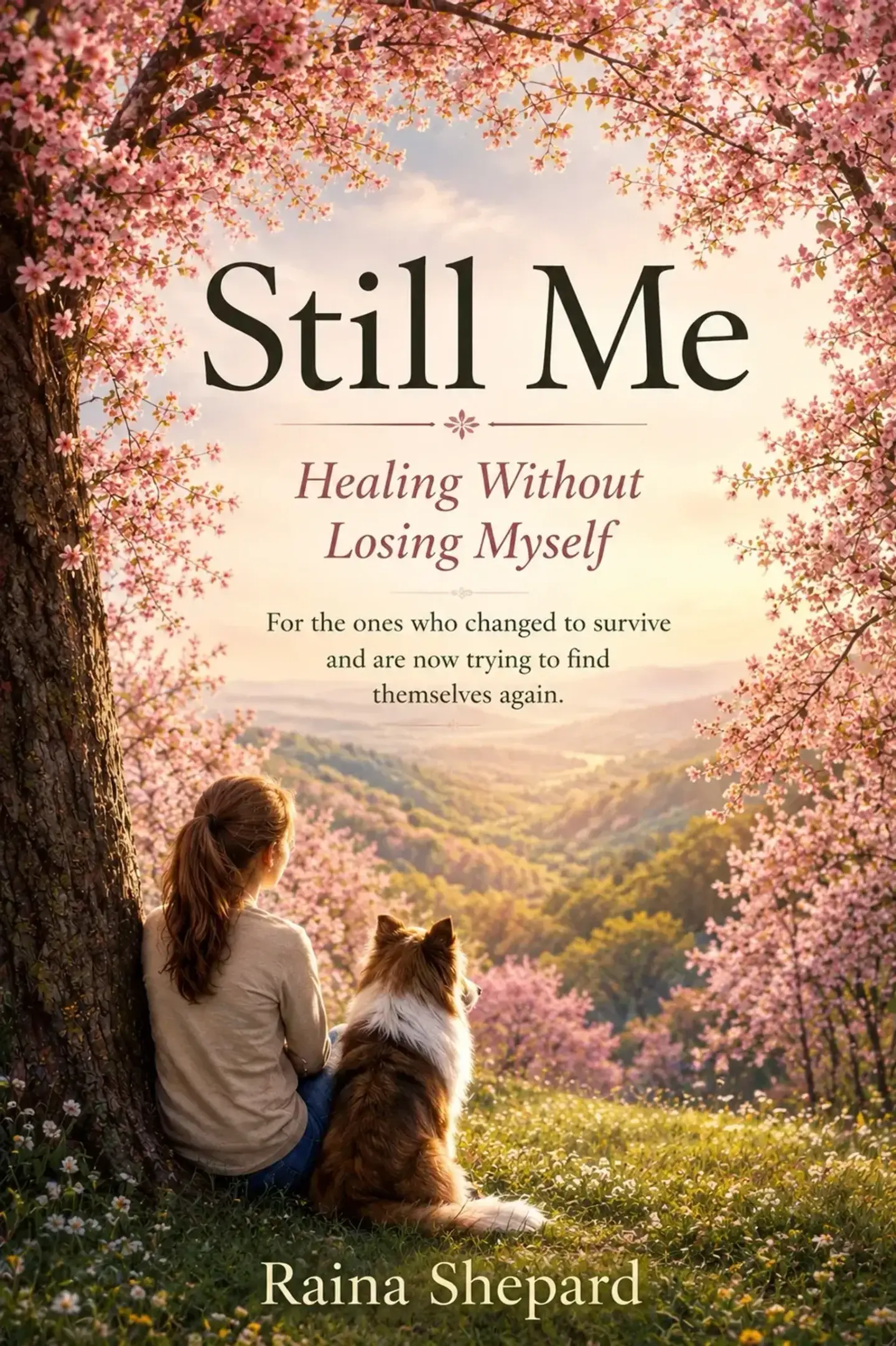
If you find yourself stuck in these patterns, know that you are not failing. You are simply learning the language of a new world. My book, Still Me: Healing Without Losing Myself, was written for those in this very season: those who are afraid that the trauma has taken too much of them.
You are still there. You are still you. The light hasn't gone out; it’s just learning how to shine through the cracks.
Take a breath. Soften your shoulders. You don’t have to get it all right today. You just have to be present for the season you are in.
If you are looking for more support on your journey, I invite you to explore my full collection of books or read more about navigating unhealthy patterns here.