August 26, 2026
5 Tiny Rituals That Help Kids Feel Safe Sharing Big Feelings
You do not have to find the perfect words to help a child talk about feelings. That is the first misconception to set down. Many parents and educators believe emotional…
You do not have to find the perfect words to help a child talk about feelings.
That is the first misconception to set down.
Many parents and educators believe emotional conversations must be deep, carefully timed, and wonderfully wise. They imagine sitting across from a child and asking, “What is really going on?”, only to meet silence, a shrug, or a sudden change of subject.
But children rarely open their hearts because an adult asked the perfect question.
They open them because safety has been built slowly through repetition, warmth, attention, and presence.
A child who feels safe sharing big feelings has usually experienced many small moments of welcome first: a calm voice after a spill, a familiar question at bedtime, a grown-up who listens before correcting, a story that gives a name to the ache they could not explain.
These moments are tiny. Their impact is not.
Whether you are raising a child at home or supporting one in a classroom, these five rituals can make emotional sharing feel less like an examination and more like an ordinary part of being human. They are not quick fixes, and they will not make every hard feeling disappear. They are gentle ways to keep the door open, however.
1. Begin with a Small, Predictable Welcome
The first ritual happens before anyone says, “How are you feeling?”
It is the welcome.
At the beginning of the day, create a brief moment that tells your child, I see you. I am glad you are here. This might be a morning hug, a special handshake, a smile across the classroom, or a familiar phrase such as:
“I’m happy to see you today.”
Keep it simple. Keep it consistent.
Some children love physical affection. Others prefer a wave, a silly greeting, or a few quiet seconds beside you. The ritual is not about performing closeness in one particular way. It is about offering connection in a form the child can receive.
A predictable welcome can be especially meaningful after a difficult night, a family change, or a tense morning. You do not need to mention the trouble immediately. You can simply create a soft landing before the day becomes crowded with instructions, schedules, and expectations.
Children often carry feelings in their bodies before they can carry them in words. A warm greeting can help them feel less guarded, less hurried, and less alone, but it may take many mornings before they begin to show you what is underneath.
Let the ritual be enough for now.
2. Use a Daily Feeling Check-In That Does Not Demand a Story
A feeling check-in should open a window, not shine a bright light into a child’s face.
If you ask, “Tell me everything that happened today,” the question may feel enormous. A smaller prompt is often easier to enter.
Try:
- “If your day were weather, would it be sunny, cloudy, windy, or stormy?”
- “What feeling visited you today?”
- “Was there a moment that felt easy, tricky, or surprising?”
- “Where did you notice a feeling in your body?”
You can use the same question at breakfast, during morning circle, in the car, or at dinner. Repetition matters. When feelings are discussed only during a meltdown, children may learn that emotions are problems to solve or behaviors to correct. When feelings have a regular place in the day, they become less frightening and less secret.
Model the ritual yourself, but keep your sharing age-appropriate. You might say, “I felt nervous before my appointment, and my stomach felt tight. I took a few slow breaths before I went inside.”
You are not asking your child to manage your emotions. You are showing that feelings can be noticed, named, and held without shame.
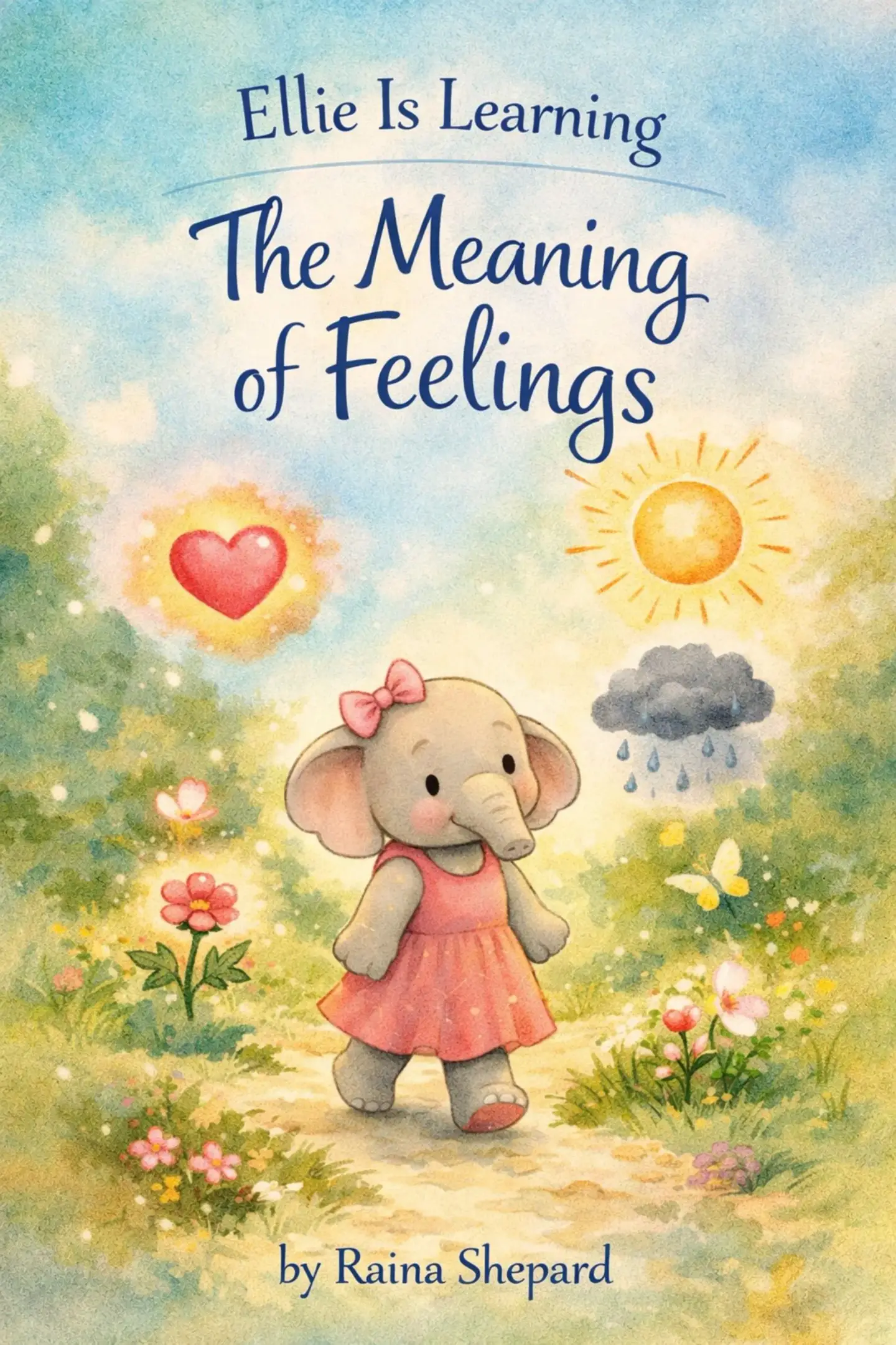
Picture books can make this ritual feel even more natural. A story from the Ellie the Elephant series can give children a character to talk about before they talk about themselves. “How do you think Ellie felt?” is sometimes a safer beginning than “How do you feel?”
The answer may be about Ellie.
It may also quietly be about them.
3. Create a No-Pressure Pause After Transitions
Some children do not need more questions after school, recess, daycare, or a busy activity.
They need a pause.
Transitions can leave a child carrying sharp frustration, buzzing excitement, tiredness, hunger, and unspoken disappointment all at once. Their emotions may be loud, but the reason beneath them may be quiet and difficult to find.
Try creating a small after-transition ritual:
- Offer water or a snack.
- Sit nearby without immediately asking for a report.
- Give the child a few minutes to move, draw, cuddle, or be quiet.
- Offer one gentle invitation when their body seems more settled.
You might say:
“I’m here if you want to tell me about your day.”
Or:
“Was there one tricky moment you want me to know about?”
The important part is the lack of pressure. You are communicating availability without requiring disclosure.
For some children, drawing is easier than talking. Invite them to draw their day as colors, shapes, faces, or weather. Let them build with blocks while you sit beside them. Read a few pages of a familiar book and pause when a character experiences something that resembles their own world.
The goal is not to extract information.
The goal is to make sharing possible.
If the child says, “Nothing happened,” you can respond, “Okay. I’ll be here later, too.” That answer may seem small, but it teaches a lasting lesson: connection does not vanish when the child is not ready to speak.
4. Practice the Pause-Listen-Name Ritual
When a child finally shares something difficult, the moment can feel urgent. You may want to explain, correct, reassure, or fix the situation immediately.
Pause first.
Listen. Then name what you notice.
You might say:
- “That sounded really disappointing.”
- “You were excited, and then the plan changed. That hurt.”
- “Your face looks worried, and your body seems tense.”
- “It makes sense that you felt left out when everyone started playing without you.”
Naming a feeling does not mean agreeing with every action that followed it. You can validate the emotion while still setting a boundary:
“It is okay to feel angry. It is not okay to hit your brother. I will help you find another way to show how strong the anger feels.”
This distinction is essential. Children need to know that their inner world is welcome, even when certain behaviors are not.
If your child is frantic or overwhelmed, conversation may need to wait. Sit at their level. Soften your voice. Breathe slowly. Offer a glass of water, a quiet corner, or a hand to hold if they want it. Once the feeling has softened from a storm to a strong breeze, you can ask what happened.
The Fairy Glitterwhisp series offers a natural way to explore this kind of emotional pause. In Fairy Glitterwhisp in the Land of Feelingwood, feelings are part of a magical world filled with friendship, empathy, courage, and belonging. A story like this can help children notice that emotions are not enemies to defeat. They are messages to understand, however imperfectly.

5. End the Day with Reflection and Repair
Children do not need every day to be smooth.
They need to know that difficult moments can be repaired.
At bedtime, during a final classroom circle, or before leaving school, ask one small reflection question:
- “What was one good part of today?”
- “What felt hard?”
- “Was there a feeling you want to let go of tonight?”
- “What is something kind you noticed?”
- “Is there anything between us that needs repair?”
You may receive a detailed answer. You may receive “I don’t know.” Both are okay.
If the day included conflict, offer a clear and honest repair. “I raised my voice earlier. I’m sorry. You deserved a calmer answer. We are still connected, and we can try again.”
Repair is not a performance of perfect parenting or perfect teaching. It is a way of showing children that relationships can survive mistakes, apologies, and changed behavior.
A comforting book can become part of this closing ritual. Read a few pages from a story about feelings, friendship, grief, or self-worth. Books create emotional distance when direct conversation feels too close. A child may be able to speak about a character’s sadness, fear, or courage long before they can speak about their own.
That is one reason meaningful children’s books about emotions can become trusted companions. They do not replace conversation. They give conversation a doorway.

Let Safety Grow Through Ordinary Moments
You may try these rituals and still hear very little at first.
That does not mean they are failing.
Children notice what happens over time: whether you remain kind after a difficult disclosure, whether you listen without laughing, whether you keep their private feelings private, whether you return after conflict, whether your attention is available even when their emotions are inconvenient.
Trust grows in seasons.
The child who refuses to talk today may remember your quiet presence tomorrow. The student who only points to a feeling card may one day tell you the whole story. The child who talks freely about a book character may eventually whisper, “I feel like that sometimes.”
Do not measure the ritual only by how much a child says.
Measure it by whether the child learns that feelings can be named, shared, survived, and met with compassion.
That is the deeper purpose of teaching children empathy books and emotional language. You are not trying to create children who are calm all the time, agreeable all the time, or easy to understand. You are helping them become people who can notice another person’s pain without turning away: and recognize their own pain without believing they are too much.
Start small.
A welcome. A pause. A story. A listening ear. A repair.
The little rituals may seem ordinary, but they quietly tell a child, again and again: You do not have to carry your big feelings alone.
Helpful resources
- Raina Shepard’s books : Explore the Ellie the Elephant series and other gentle children’s stories.
- Sesame Workshop: Talking with Kids About Feelings : Everyday activities for naming emotions, building self-awareness, and developing empathy.
- Children’s Wisconsin: How to Help Your Young Child Talk About Their Feelings : Practical guidance on validation, body awareness, reflection, and asking children what support they need.