June 28, 2026
10 Reasons Your Child’s Approach to Emotions Isn't Working (And How to Fix It)
You have likely been told that a "good" child is a quiet one. We celebrate the toddler who sits still in the grocery cart and the student who never raises their voice, often…

You have likely been told that a "good" child is a quiet one. We celebrate the toddler who sits still in the grocery cart and the student who never raises their voice, often mistaking silence for stability. But there is a frantic, aching difference between a child who is calm and a child who has simply learned to hold their breath.
When your child’s emotional world feels like a storm you cannot steer, it isn't because they are "difficult" or because you are failing. Often, the traditional ways we teach children to handle their hearts are built on quick fixes and clinical distance rather than soulful presence. If you find yourself in a cycle of tantrums, withdrawal, or constant friction, it’s time to look at the subtle, quiet reasons why the current approach might be faltering: and how you can gently lead them toward a path of true emotional healing.
1. The Trap of Suppression
We often reward children for "staying strong" or "getting over it," but suppression is merely an emotional debt that will eventually be paid with interest. When a child suppresses a feeling, it doesn't disappear; it settles into their body as a sharp, unnamable tension.
The Fix: Validate the existence of the feeling before you ever try to change it. Instead of "You're okay," try "I can see that your heart feels very heavy right now." This simple shift moves them from isolation to companionship.
2. The "Fix-It" Reflex
As a caregiver, your instinct is to stop your child's pain. You want to provide a solution, a toy, or a distraction to pull them back into the light. However, when we jump straight to the "fix," we inadvertently tell the child that their discomfort is a problem to be solved rather than an experience to be lived.

In the Fairy Glitterwhisp series, we see that empathy isn't about making the darkness go away: it’s about holding a small light so the child isn't alone in it.
The Fix: Practice "sitting in the puddle" with them. Don't offer a towel yet. Just sit. Your presence is the most transformative tool you possess.
3. Ignoring the "Early Glow"
Most of us only react when the emotional fire has become a wildfire: a full-blown meltdown or a slammed door. We miss the "early glow" of the embers: the fidgeting, the avoiding of eye contact, the subtle shift in the tone of their voice.
The Fix: Become a student of your child's subtle cues. When you notice that early flicker of frustration, offer a "soft landing." A brief walk, a sensory tool, or even a moment of quiet connection can prevent the storm before it breaks.
4. The Vocabulary Gap
It is impossible to navigate a landscape if you don't have a map. Many children struggle because they only have a few words for their internal states: happy, sad, mad. Without more nuanced, sensory adjectives, their emotional pain feels like a vast, terrifying blur.

In Ellie Is Learning The Meaning of Feelings, Ellie discovers that feelings are as varied as the weather: some are like grey rain clouds, others like a bright, warm sun.
The Fix: Use children's books about emotions to give them names for the "middle ground" of feelings, like fluttery, prickly, or heavy.
5. The Solo Journey Myth
We often expect children to "go to their room and think about what they did" when they are most dysregulated. But grief, anger, and fear are not solo journeys. Expecting a child to self-regulate before they have been consistently co-regulated is like asking them to drive a car without ever being in the passenger seat.

Whether it’s navigating a family change as seen in Ellie’s Heart Between Homes or dealing with books for kids about grief, the message must remain: I am with you.
The Fix: Shift from "Time-Out" to "Time-In." Invite them into your space to regulate alongside you, using your own calm breathing as an anchor for theirs.
6. Performance Over Presence
Sometimes, children learn to perform the "correct" emotion to please the adults around them. They may apologize quickly or stop crying because they see your frustration. This creates a disconnect between their internal truth and their external mask, which can lead to a long-term struggle with self-worth.
The Fix: Reward honesty over obedience. Thank them for telling you they are angry, even if the anger is directed at you. Validation builds a foundation that "it is safe to be me."
7. The Logical Brain Trap
Trying to reason with a child in the middle of a meltdown is a common mistake. When a child is overwhelmed, their rational brain is essentially offline. Lists of reasons, explanations, and logical consequences are just noise to a heart that is currently in "survival mode."
The Fix: Wait for the "cool down." Save the teaching and the "how to fix it" conversations for later: perhaps at bedtime or the next morning: when their system is quiet and receptive.
8. Lack of Safe "Containers"
Emotions can feel like a flood. Without a "container": a specific set of tools or a designated safe space: the flood just washes everything away. Children need tactile, concrete ways to handle the abstract weight of their feelings.
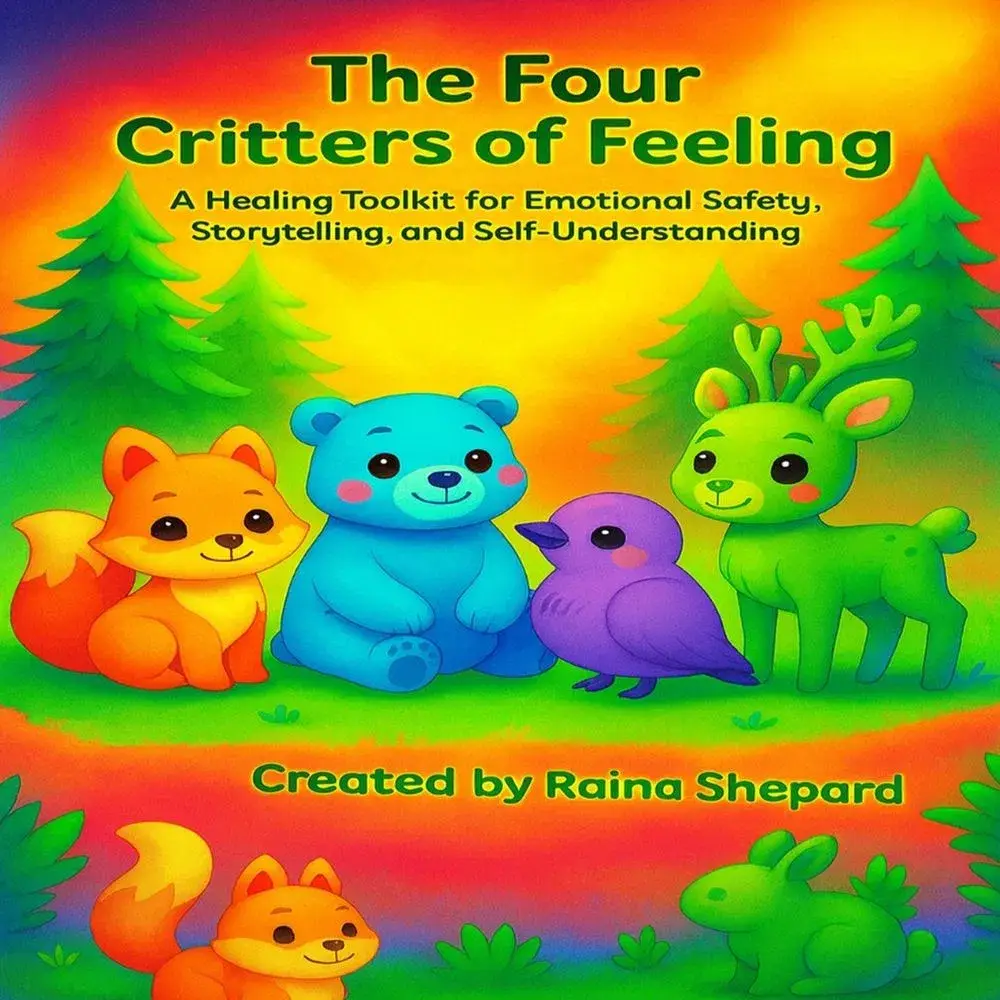
This is why resources like The Four Critters of Feelings: A Healing Tool-Kit are so vital. They provide a structure for understanding emotional safety.
The Fix: Create a "peace corner" or a "regulation station" in your home filled with soft pillows, books on emotional healing, and sensory objects that help ground their energy.
9. The Modeling Mirror
Your child is a mirror of your own emotional state. If you are struggling with breaking unhealthy patterns or navigating your own spiritual growth, they will sense that frantic energy.

We cannot lead our children to a place of peace if we haven't visited it ourselves. As explored in The Chosen Child, our own healing from trauma and personal transformation is the greatest gift we can offer the next generation.
The Fix: Be transparent about your own process. Let them see you take a deep breath when you are frustrated. Say, "I'm feeling a bit overwhelmed, so I'm going to sit quietly for a moment."
10. Viewing Emotions as Enemies
The most fundamental reason a child’s approach isn't working is the belief that some emotions are "bad" or "wrong." If a child views their anger as a monster, they will spend their lives trying to cage it. If they see it as a messenger: telling them that a boundary has been crossed: they can learn to listen to it.
The Fix: Reframe emotions as messengers. Every feeling is a data point. When we stop fighting the feeling, we can start listening to what it’s trying to tell us about our needs, our safety, and our worth.
The path to healing from trauma and emotional maturity is rarely a straight line. It is a season of vigilance, explanation, and constant adjustment. But by moving from a place of "fixing" to a place of "presence," you are not just changing a behavior; you are nurturing a soul. You are teaching them that while the world may be loud and frantic, the space between the two of you will always be a place of soft, shimmering light.